A train bulldog puppy basics guide should make everyday handling easier to practise safely. Start with voluntary contact, a gentle touch the puppy accepts and a gradual introduction to familiar equipment. These are useful foundations for care; they do not guarantee that every Bulldog will accept grooming, examination or lifting without further help.
This is general training information, not veterinary advice. Ask your vet to demonstrate any handling needed for your puppy’s health and to advise on suitable equipment. Stop if the puppy appears uncomfortable or frightened. A breathing concern, pain or sudden behaviour change belongs in a veterinary conversation, not a longer training session.
Prepare a calm handling area
Choose a quiet part of the home with secure footing and room for the puppy to move away. Put away items that might be grabbed while you are occupied. Keep the reward and equipment within reach, but avoid scattering several novel items around the puppy. The first question is whether the setup allows a relaxed voluntary interaction.
Decide which person will practise and what the single task will be. A suitable first task might be approaching a seated household member, not accepting every type of touch at once. Explain the plan to the rest of the household so nobody adds a sudden cuddle or equipment change. Children need active adult supervision and should not conduct a difficult handling exercise.
Write the task in a short note before beginning. For example: puppy may approach, brief touch only if comfortable, then allow it to leave. This is your proposed exercise, not a clinical test. The note helps prevent an ordinary interaction from turning into a sequence of tasks the puppy did not expect.
Find a reward the puppy can use comfortably
Dogs Trust’s reward-training guidance explains rewarding the behaviour you want with something the dog values. Choose a suitable reward and ask the vet how edible rewards fit within the puppy’s feeding plan. A treat is not automatically suitable just because another dog likes it.
Offer the reward in a familiar situation first. If the puppy does not want it, do not assume that it is being stubborn. Pause and consider whether the setup, timing or reward needs to change. If appetite has changed generally, contact the vet. Training should not be used to explain away a possible health issue.
Keep delivery simple. One adult handles the reward so you can tell what happened after the behaviour. A second person can observe without touching the puppy. Avoid using food to pull the animal into an uncomfortable hold and then declaring that the exercise was voluntary because a treat was present.
Practise approach before touch
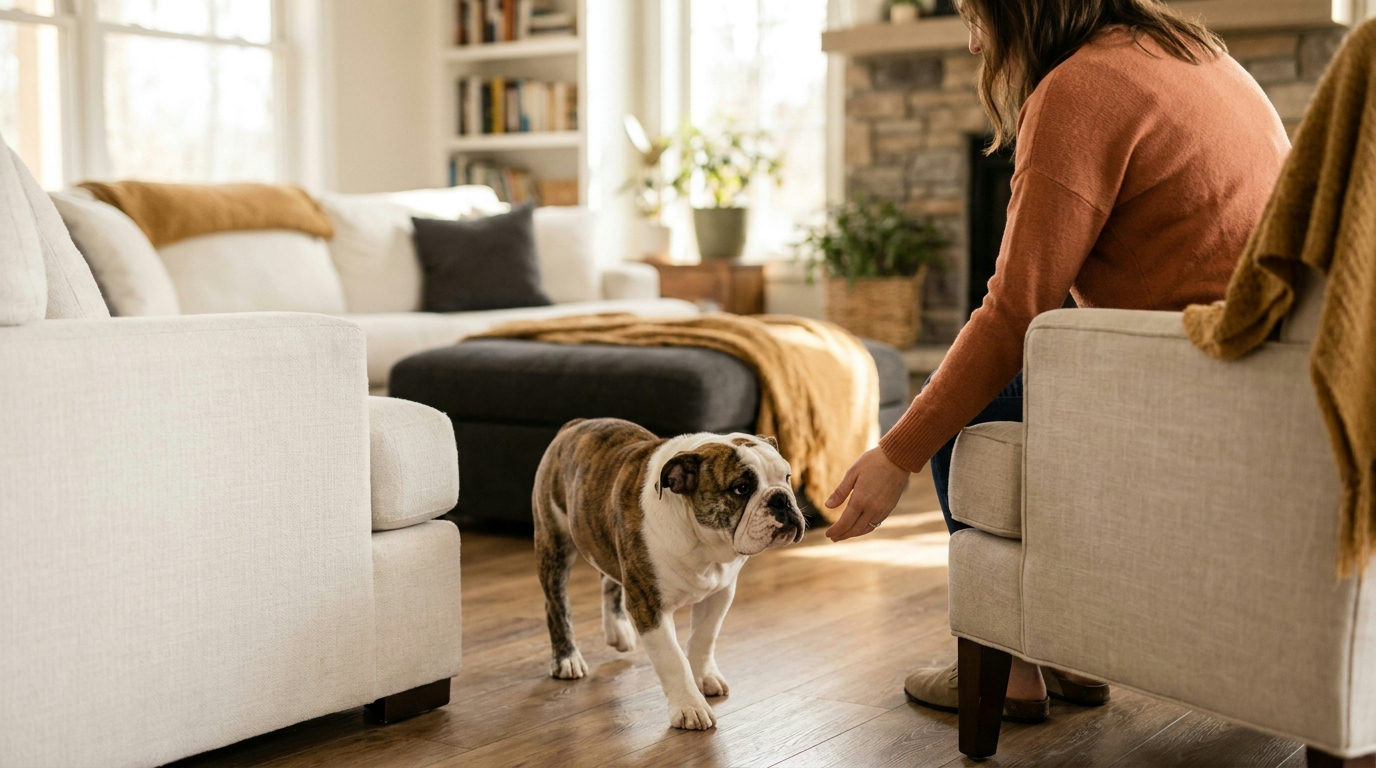
Sit or stand in a position that leaves room for the puppy to approach and depart. Remain calm and let it decide whether to investigate. Reward a comfortable approach without immediately reaching over the head. If the puppy moves away, let that interaction end rather than following it around the room with the next task.
Repeat this familiar interaction when the puppy is ready. You might notice that it approaches one person more readily than another, or that the same person is easier to approach while seated. Record that detail. Do not turn the difference into a claim about the puppy’s personality; it gives you a setup to discuss or practise more gently.
When a guest visits, explain the same approach rule. The visitor does not need to touch the puppy during the first meeting. Keep the meeting manageable and give the puppy access to its rest area. A successful introduction can simply be observing the visitor without a forced interaction.
Add a brief familiar touch
Dogs Trust’s puppy-socialisation guidance includes gradual handling introductions. Ask your vet or qualified trainer to demonstrate appropriate touch and how to recognise when your puppy needs space. Begin with a form of gentle contact the animal already accepts rather than testing a sensitive area.
Keep the first attempt brief and release the contact. Offer the chosen reward for the comfortable interaction. Watch the whole response: does the puppy stay voluntarily, move away or appear tense? Do not use stillness alone as proof of enjoyment. If you are unsure, stop and ask someone qualified to help interpret the behaviour.
Practise one body-area task at a time when appropriate. An exercise involving a familiar shoulder touch should not automatically become mouth inspection, paw manipulation and ear handling. Describe which touch was comfortable and which remains untried. This helps the trainer adapt the next step without requiring the puppy to tolerate a complete examination at home.
Introduce the actual collar or harness separately
Choose equipment appropriate for the puppy and follow the maker’s fitting instructions, with professional help if needed. Dogs Trust’s harness-training guide describes gradual introduction and advises returning to an easier stage if the dog struggles. Do not interpret the equipment’s brand or appearance as proof of a suitable fit.
Let the puppy investigate the equipment before attempting to put it on. Keep the fastenings and any movement quiet and controlled. If the puppy is worried by the item, practise an earlier comfortable stage rather than forcing the wearing step. Getting it physically onto the animal is not the same as completing a positive introduction.
Once wearing is appropriate and comfortable, observe ordinary movement in the safe home area. Check that the equipment remains fitted as intended. Remove it when the instructions or care arrangement require removal. A first wearing session does not need to include a walk, new visitors and a new route; those add separate questions.
Treat lifting as a demonstrated care skill
Do not assume that accepting a stroke means accepting being picked up. Ask a professional to show you whether lifting is appropriate for your puppy and how to support it. A growing Bulldog may need a different handling arrangement from the one you used when it first arrived. Avoid learning a hold by trial and error.
If the vet or trainer gives you a lifting exercise, practise the demonstrated step in the suitable area and stop at the agreed limit. Have another adult available if the professional recommends assistance. Visitors and children should not use the puppy as an opportunity to try an unfamiliar hold.
Keep a separate note for this skill. Record the demonstrated method, who should perform it and any reason to stop or request help. Do not merge it with the collar routine merely because both involve handling. The care note should allow someone to recognise which skill has been practised and which remains unapproved.
Keep a useful progress record
Use three fields: the setup, the exact action and the puppy’s response. A useful entry might say seated adult, voluntary approach, brief familiar touch accepted before puppy walked away. It does not need to label the puppy good or bad. The purpose is to describe the interaction accurately enough to plan another manageable step.
If an exercise becomes difficult, stop and review what changed. Did the person stand up, did the equipment move differently, or did another pet enter? Return to a comfortable arrangement where appropriate and ask for help when the pattern remains unclear. Do not keep escalating the task to see whether the puppy eventually gives up resisting.
Build care cooperation at the puppy’s pace
Share the current step with other caregivers and keep the same equipment and handling instructions available. Review the plan with your vet when a health-related task is needed, and with a qualified trainer when progress is difficult. There is no fixed calendar that every puppy must complete or title it must earn before receiving patient handling practice.
Use this train bulldog puppy basics guide to choose one manageable interaction today: a voluntary approach, a familiar touch or an earlier stage of equipment introduction. Stop while the arrangement remains comfortable and record what actually happened. Those specific observations give you a useful foundation for the next care conversation and practice session.