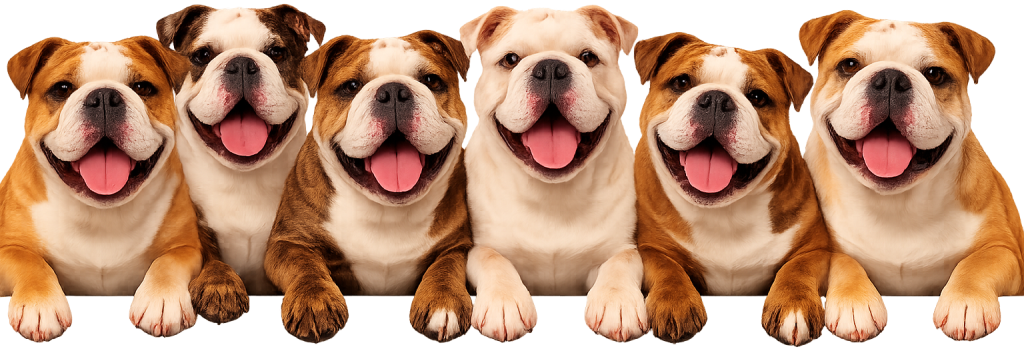
To train bulldog puppy basics, begin with a calm home arrangement, rewards for simple useful behaviours and gentle introductions to ordinary experiences. Socialisation is not a race to collect encounters. Your puppy should be able to move away and rest, and public activities need a plan from your veterinarian for this puppy and location.
This is general training information, not veterinary advice. Ask your vet about health, vaccination-related precautions, suitable activity and equipment. Seek qualified training help if an exercise causes fear or remains difficult. The routines below are suggested starting tasks, not promises of a particular temperament, title or learning deadline.
Choose one useful household task
List the situations that occur in your home: someone approaches the puppy, a door opens, equipment is put on or the family sits down for a meal. Choose one situation to practise first. A useful goal might be a comfortable voluntary greeting or turning toward the caregiver in a quiet room. Avoid writing a goal as vague as obedient puppy.
Prepare the area before the puppy arrives. Remove accessible hazards, arrange secure footing and keep other pets managed appropriately. Have a suitable reward ready and decide where the puppy can retreat. The first task does not need an audience, several new objects or a noisy demonstration.
Tell everyone the same simple plan. For example, one adult practises a quiet greeting while the others leave space. Children should participate only with active adult supervision. A puppy cannot follow consistent household expectations if one person rewards jumping while another shouts at it for the same approach.
Use a reward the puppy values
Dogs Trust explains reward-based training as offering something the dog wants after the behaviour you want to encourage. Ask your vet how edible rewards fit within the feeding plan and use an option suitable for your puppy. Praise or another appropriate reward can also matter, depending on the individual.
Notice the precise action before offering the reward. If the goal is a calm approach, reward that approach rather than wait until you have added an unfamiliar hold. Keep the reward easy to deliver without looming over the puppy. A second person can observe, but should not add a competing cue or reward at the same time.
Stop when the puppy appears uncomfortable or the task becomes confusing. Do not label food refusal stubbornness, and contact the vet if appetite has changed generally. You can record which reward was available and whether the puppy used it. That is more useful than increasing pressure until an animal performs despite its uncertainty.
Practise attention in a familiar space
Dogs Trust’s name-training guide begins in a quiet setting and rewards the dog for checking in. It advises against repeating the name continually when the dog does not respond. Use the name as a clear attention cue within a gradual exercise, not as a substitute for every instruction.
Observe a voluntary glance toward you and reward it in the familiar room. As the exercise becomes appropriate, follow the guide’s introduction of the name and ask your trainer to check your timing. Do not move straight from this room to a crowded setting to prove that the puppy knows the word everywhere.
Write the location and distraction level beside the result. Puppy looked toward caregiver in quiet room is a precise observation. Puppy knows name is a broader claim that a first exercise cannot establish. If another person practises, have them use the same current stage rather than test the skill with a louder call from another room.
Try a simple position only when comfortable
Dogs Trust’s sit guide describes guiding with a treat, rewarding the position and adding the verbal cue once the behaviour is established. It says not to push the dog’s bottom down. Ask a qualified trainer to demonstrate the movement if you are uncertain, and consult the vet if a position appears uncomfortable.
Keep this exercise separate from greeting a new person. Use the familiar room and a supported surface. If the puppy backs away or does not follow, pause and review the setup instead of physically placing it. You are offering a learning opportunity, not requiring a posture before the animal can leave.
Record what was attempted and whether help is needed. There is no need to repeat the exercise until the puppy is tired or to attach a deadline to learning it. A brief comfortable attempt and a specific question for the trainer are a useful result. Stop immediately if movement appears painful or breathing is concerning.
Introduce ordinary experiences gradually
Dogs Trust’s socialisation guidance describes positive introductions to people, sounds, environments and handling. Use it to prepare manageable experiences rather than a compulsory exposure quota. Ask your vet which settings and contacts are appropriate before planning public outings or meetings with unfamiliar dogs.
Make a home-experience card with separate entries: a familiar person wearing a hat, an ordinary household sound at a comfortable distance, or a different safe surface. These are examples of tasks to consider, not items every puppy must complete. Choose one that suits the current arrangement and keep the rest for another occasion.
Let the puppy observe without forcing contact. If a visitor is involved, explain that the puppy may approach or leave. Avoid a crowd surrounding the animal, and do not use treats to prevent it retreating from something that frightens it. A quiet observation from a comfortable distance can be the entire exercise.
Keep handling and equipment introductions distinct
Ask the vet or trainer to show appropriate gentle handling for your puppy. Begin with familiar contact the puppy accepts. Do not assume that allowing a stroke means it is ready for mouth inspection, paw manipulation or lifting. Each care task can need its own introduction and support.
For a collar or harness, check the maker’s fitting instructions and have a professional help if necessary. Let the puppy investigate the item before attempting unfamiliar fastenings. Wearing equipment at home, walking with it and encountering a new environment are separate steps. Combining all three can make it difficult to tell which part caused concern.
Keep a note of the exact equipment and current comfortable stage. Share it with other caregivers. A visitor does not need to demonstrate the puppy’s tolerance by lifting it or adjusting its harness. Handling practice should support everyday care, not become a performance that the animal must endure for people.
Prepare a toileting and rest routine alongside lessons
RSPCA toilet-training guidance recommends offering appropriate opportunities and rewarding toileting in the intended place. Discuss the puppy’s needs with your vet and prepare a routine that people can actually follow. Do not punish an accident or rely on a universal holding-time formula from an online chart.
Record the opportunities you offered and the outcome. If an accident happens, review supervision and access rather than assigning blame. Keep the cleaning instructions and suitable supplies available. Ask the clinic about an unexpected change in toileting or another sign that concerns you; training does not explain every physical problem.
Provide a quiet rest area and keep it available between activities. Explain that people should not disturb the puppy there to add one more lesson. A calm home routine includes care, appropriate activity and rest, not continuous training because the puppy is awake. Use professional advice to adapt the arrangement when it is difficult.
Review the next step from actual observations
Keep the practice log short: task, setup, puppy’s response and the question for next time. A useful entry identifies one thing that worked and one uncertainty. Avoid filling it with an ideal schedule the household did not follow. Honest details help a trainer suggest a manageable adjustment.
To train bulldog puppy basics, choose one clear task today and keep the interaction comfortable. Reward the useful behaviour, allow the puppy space and separate new experiences from handling demands. Bring health questions to the vet and training questions to a qualified professional. The goal for the next session is a sensible step based on what your puppy actually did.