
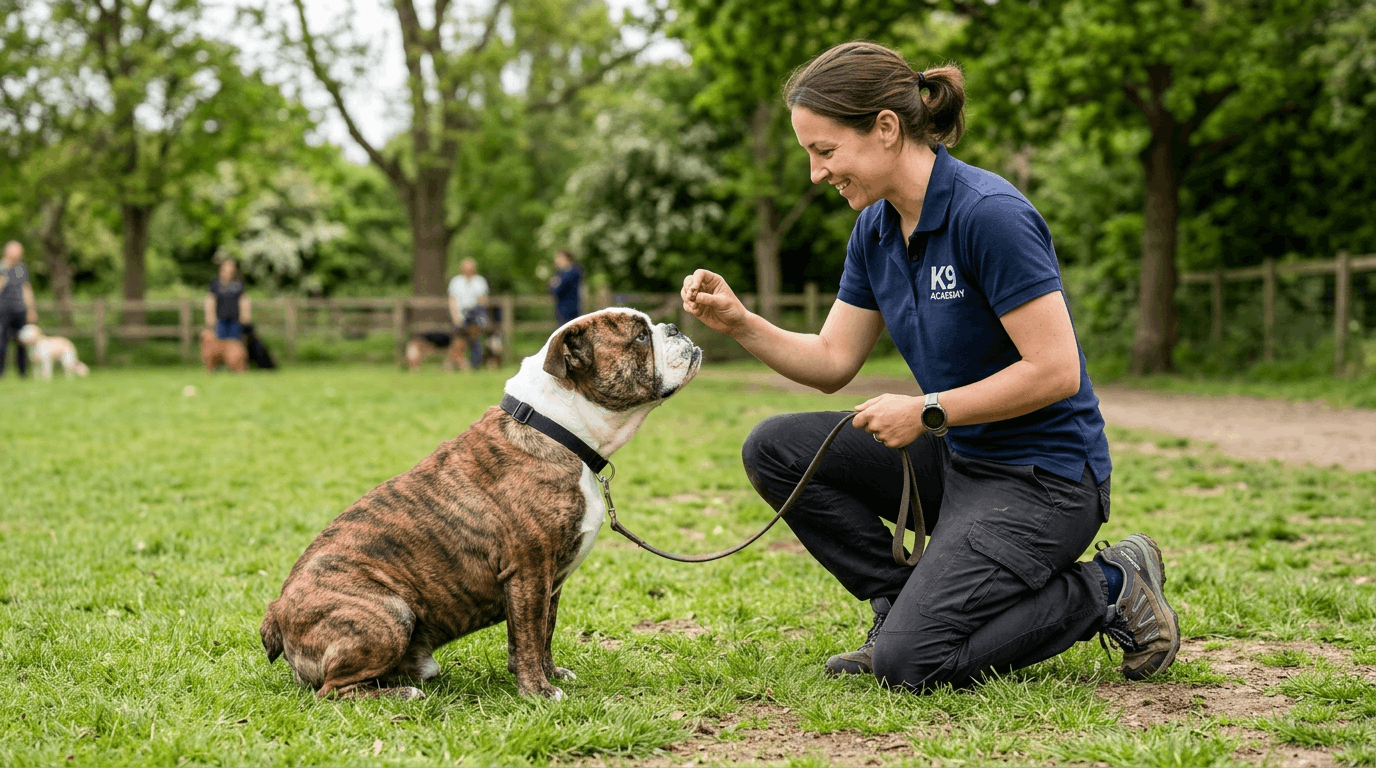
Building reliable bulldog obedience training habits takes patience, consistency, and realistic expectations. Bulldogs are intelligent, affectionate, and loyal dogs, but they also have a stubborn side that sometimes frustrates owners. Many people assume bulldogs simply refuse to listen. In reality, most bulldogs respond well when training stays clear, calm, and rewarding.
Unlike highly reactive working breeds, bulldogs often think carefully before responding. They usually prefer comfort, routine, and motivation over constant repetition or harsh correction. Because of this personality, owners must approach training with patience instead of force.
Strong communication matters more than dominance. Bulldogs learn best through trust, repetition, and positive experiences that build confidence naturally. Additionally, short consistent sessions usually work far better than long intense training drills.
Successful bulldog obedience training improves far more than basic commands. It strengthens emotional connection, reduces household stress, improves safety, and helps bulldogs navigate daily life calmly. Well-trained bulldogs often become more relaxed, confident, and emotionally stable because they understand expectations clearly.
Many owners struggle because they expect instant results. However, bulldogs thrive when routines feel consistent and predictable over time. Once owners understand how bulldogs learn, training becomes much more enjoyable and effective.
Understand the Bulldog Personality First
Bulldogs think differently from many other breeds.
They are not usually hyperactive or eager to please constantly. Instead, bulldogs often evaluate situations carefully before responding. Additionally, they may ignore commands if they feel confused, pressured, or unmotivated.
This does not mean they lack intelligence.
In fact, bulldogs often learn quickly when training feels rewarding and emotionally safe. However, they rarely respond well to yelling, punishment, or excessive repetition.
Successful bulldog obedience training depends heavily on understanding how bulldogs process information and motivation.
Patience creates better long-term results than frustration ever will.
Start With Trust and Consistency
Trust forms the foundation of effective training.
Bulldogs respond best when owners stay calm, predictable, and emotionally consistent. Additionally, dogs learn faster when commands, routines, and expectations remain stable daily.
Changing rules constantly creates confusion.
For example, allowing jumping sometimes but correcting it later makes learning harder. Consistency helps bulldogs understand exactly what behavior earns rewards.
Reliable bulldog obedience training develops naturally when dogs feel secure about expectations.
Use Positive Reinforcement Daily
Positive reinforcement works extremely well with bulldogs.
Rewarding desired behavior encourages dogs to repeat it naturally. Treats, praise, toys, affection, and calm encouragement all help reinforce learning effectively.
Additionally, immediate rewards improve clarity during training sessions.
Bulldogs often shut down emotionally when training feels harsh or intimidating. Positive methods build confidence while strengthening communication.
Successful bulldog obedience training focuses more on guiding behavior than punishing mistakes.
Keep Training Sessions Short
Bulldogs usually lose focus during long sessions.
Five to ten minutes of focused training often works much better than extended repetitive practice. Additionally, short sessions prevent frustration for both dog and owner.
Ending sessions positively helps maintain motivation for future learning.
Frequent short sessions throughout the week create faster progress than occasional exhausting drills.
Consistent bulldog obedience training becomes easier when owners respect the breed’s natural attention span.
Teach Basic Commands First
Simple commands create essential communication skills.
Sit, stay, come, leave it, down, and leash manners provide strong foundations for daily life. Additionally, these skills improve safety and household structure significantly.
Owners should master one behavior before adding several new commands at once.
Clear communication helps bulldogs understand expectations more confidently.
Reliable bulldog obedience training begins with strong basic habits practiced consistently in real-life situations.
Timing Matters During Training
Rewards must happen quickly.
If owners wait too long to reward behavior, bulldogs may not understand which action earned praise. Additionally, delayed correction often creates confusion rather than learning.
Immediate feedback improves clarity dramatically.
Successful bulldog obedience training relies on precise communication that helps dogs connect actions with consequences naturally.
Consistency and timing together create faster progress.
Avoid Repeating Commands Constantly
Many owners accidentally train dogs to ignore them.
Repeating commands several times teaches bulldogs that listening immediately is optional. Instead, owners should give commands once clearly and guide the dog calmly if needed.
Additionally, repeating commands with frustration usually reduces responsiveness over time.
Strong bulldog obedience training develops when commands remain calm, clear, and consistent.
Dogs learn that listening the first time matters.
Make Training Part of Daily Life
Training should not happen only during formal sessions.
Owners can reinforce behavior during walks, feeding routines, playtime, grooming, and quiet household moments. Additionally, daily repetition helps commands become natural habits.
For example, asking for a sit before meals strengthens impulse control consistently.
Reliable bulldog obedience training improves fastest when learning becomes part of normal life instead of isolated exercises.
Use Food Motivation Wisely
Bulldogs often respond strongly to food rewards.
Small healthy treats help maintain focus and motivation during training sessions. However, owners should avoid overfeeding or relying completely on treats forever.
Gradually replacing food rewards with praise and life rewards improves long-term reliability.
Balanced bulldog obedience training uses motivation strategically while maintaining healthy nutrition habits.
Leash Training Requires Patience
Bulldogs sometimes pull because of excitement or stubbornness.
Loose-leash walking develops gradually through consistency and calm redirection. Additionally, owners should avoid jerking leashes or creating stressful walking experiences.
Stopping movement when pulling begins often teaches bulldogs that tension slows progress.
Successful bulldog obedience training includes calm structured walking habits that improve control and communication outdoors.
Socialization Supports Better Listening
Proper socialization improves confidence and responsiveness.
Bulldogs exposed calmly to different environments, people, sounds, and experiences often adapt more comfortably later in life. Additionally, confident dogs usually focus better during training.
Socialization should feel positive rather than overwhelming.
Gradual exposure creates emotional stability that supports stronger obedience habits naturally.
Balanced bulldog obedience training includes emotional confidence alongside command learning.
Stay Calm During Mistakes
Every dog makes mistakes during learning.
Owners who react emotionally often create confusion or stress. Instead, calm redirection teaches bulldogs more effectively while preserving trust.
Frustration rarely improves learning speed.
Additionally, bulldogs sometimes become stubborn when they sense tension or pressure from owners.
Reliable bulldog obedience training develops through patience, repetition, and emotional consistency over time.
Build Strong Recall Early
Coming when called is one of the most important skills.
Owners should make recall rewarding and positive from the beginning. Calling bulldogs only for punishment or unpleasant experiences weakens trust quickly.
Additionally, practicing recall in safe low-distraction environments builds reliability gradually.
Strong bulldog obedience training always prioritizes safety-based commands like recall and leave it.
Avoid Overstimulating Training Environments
Bulldogs often struggle to focus in chaotic settings.
Owners should begin training in calm quiet areas before adding distractions gradually. Additionally, overwhelming environments may increase stubborn behavior simply because dogs feel overstimulated.
Gradual difficulty progression improves learning confidence naturally.
Effective bulldog obedience training builds focus step by step instead of expecting instant perfection around distractions.
Consistency Between Family Members Matters
Mixed signals slow progress dramatically.
Everyone in the household should use the same commands, rules, and expectations whenever possible. Additionally, inconsistent responses confuse bulldogs quickly.
For example, one person allowing jumping while another discourages it weakens training progress.
Unified bulldog obedience training creates clearer communication and faster learning overall.
Reward Calm Behavior Naturally
Many owners accidentally reward excitement.
Attention during barking, jumping, whining, or demanding behavior sometimes reinforces those habits unintentionally. Instead, rewarding calm behavior encourages emotional balance naturally.
Bulldogs often become more relaxed when owners consistently reinforce calm decision-making.
Reliable bulldog obedience training improves emotional regulation alongside command performance.
Mental Stimulation Improves Training Success
Bored bulldogs may become stubborn or distracted.
Puzzle toys, scent games, enrichment feeding, and interactive play improve mental engagement significantly. Additionally, mentally stimulated dogs often learn more effectively during training sessions.
Mental exercise reduces frustration while improving focus naturally.
Balanced bulldog obedience training includes enrichment activities that support emotional and behavioral health overall.
Respect Physical Limitations
Bulldogs have unique physical needs.
Because of breathing limitations and joint sensitivity, owners should avoid exhausting repetitive drills or overheating during outdoor sessions. Additionally, short breaks help bulldogs stay comfortable and focused.
Training should feel manageable physically and emotionally.
Healthy bulldog obedience training respects the breed’s structure while maintaining steady progress safely.
Celebrate Small Improvements
Progress often happens gradually.
Many owners focus too heavily on mistakes instead of recognizing improvement. However, rewarding small successes builds confidence and motivation for both dog and owner.
Every calm response, successful recall, or improved leash walk matters.
Strong bulldog obedience training develops steadily through small repeated wins over time.
Know When Professional Help Helps
Some bulldogs develop challenging behaviors requiring additional support.
Fear, aggression, extreme reactivity, or severe stubbornness may benefit from experienced professional trainers who use positive methods. Additionally, early support often prevents larger problems later.
Seeking help does not mean failure.
Responsible bulldog obedience training sometimes includes expert guidance to improve communication and confidence safely.
Teaching a bulldog to listen consistently requires patience, structure, and realistic expectations rather than force or frustration. Bulldogs may appear stubborn at times, but most respond extremely well when training feels calm, rewarding, and emotionally safe. Effective bulldog obedience training focuses on trust, repetition, positive reinforcement, and clear communication that owners maintain consistently over time. Additionally, short training sessions, structured routines, proper socialization, and calm leadership help bulldogs develop stronger focus and better daily behavior naturally. Owners who stay patient and emotionally consistent usually see the best long-term results. Bulldogs thrive when expectations remain predictable and learning feels positive rather than stressful. In the end, obedience training is not about controlling a dog through fear. It is about building communication, trust, safety, and confidence that improve everyday life for both bulldog and owner.
FAQ
1. Why are bulldogs sometimes difficult to train?
Bulldogs are independent thinkers and often respond best to calm patient positive reinforcement methods.
2. How long should bulldog training sessions last?
Most bulldogs learn best with short sessions lasting about five to ten focused minutes.
3. What rewards work best during training?
Small treats, praise, toys, and affection usually motivate bulldogs effectively during learning sessions.
4. Can older bulldogs still learn obedience skills?
Yes. Older bulldogs can learn new behaviors successfully with consistency, patience, and positive reinforcement.
5. How do owners improve leash behavior in bulldogs?
Consistent loose-leash practice, calm redirection, and proper equipment help improve walking manners gradually.