
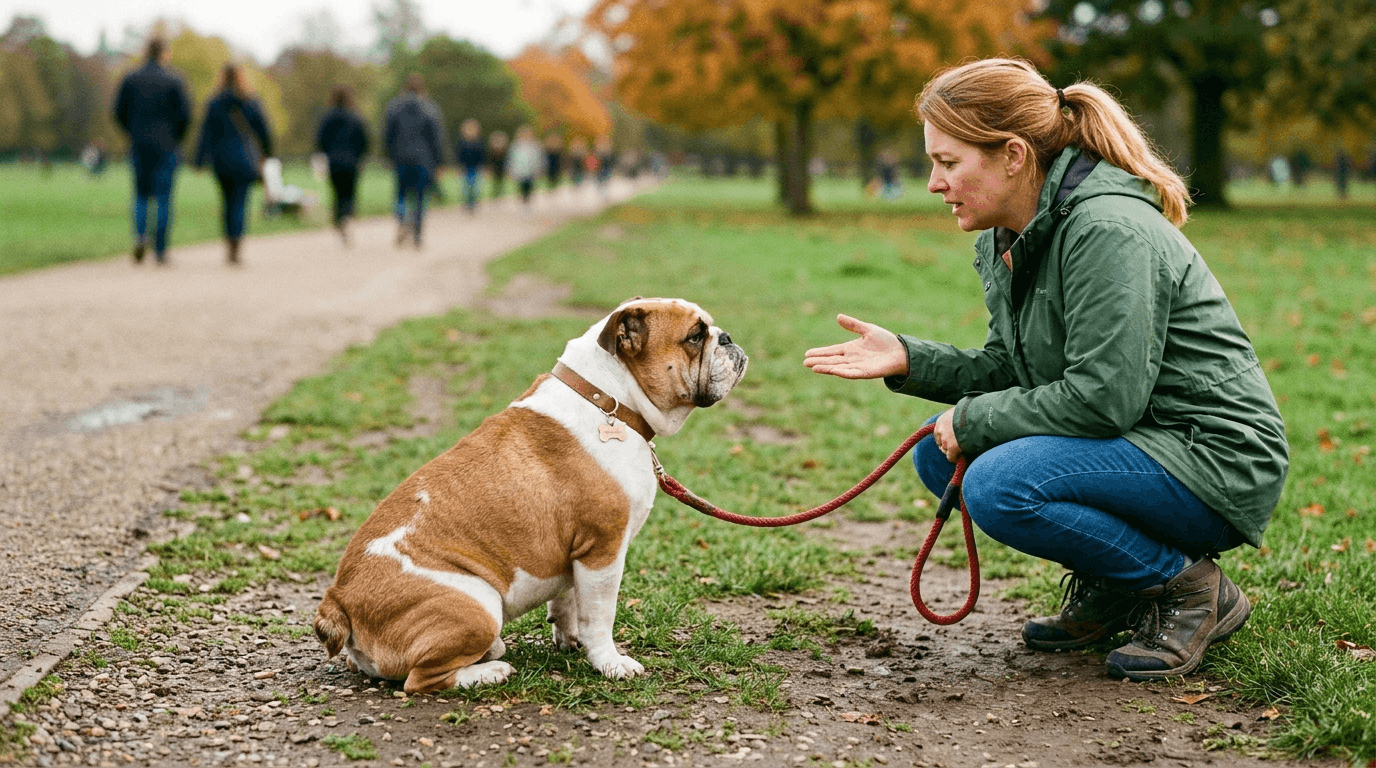
A bulldog refusing commands can quickly become frustrating, especially when owners feel like training efforts are going nowhere. Bulldogs are intelligent dogs, but they are also independent thinkers with stubborn personalities. Unlike breeds that constantly seek approval, bulldogs often evaluate situations before deciding whether they want to cooperate.
That behavior does not mean they cannot learn.
In fact, bulldogs usually respond well to calm, consistent training methods when owners understand their personality properly. However, harsh discipline, inconsistent routines, and unrealistic expectations often create resistance instead of obedience.
Many owners mistakenly believe their bulldog is being difficult on purpose.
Usually, the real issue involves communication problems, lack of motivation, confusion, or emotional stress. Once owners identify the underlying cause, training often improves dramatically.
A bulldog refusing commands may simply need clearer structure, better rewards, or more consistent leadership.
With patience and realistic expectations, bulldogs can become far more cooperative and responsive over time.
Why Bulldogs Often Ignore Commands
Bulldogs think differently from highly obedient working breeds.
They tend to process commands more slowly and often prefer calm environments over fast-paced training sessions. Additionally, bulldogs become stubborn when they feel pressured or overwhelmed.
A bulldog refusing commands frequently reflects confusion rather than defiance.
Some dogs stop listening because owners accidentally repeat commands too often without follow-through. Others become distracted easily or lose interest when training feels repetitive.
Motivation also plays a major role.
Bulldogs generally respond better when they see clear rewards or positive outcomes. Unlike eager-to-please breeds, they rarely obey simply to satisfy the owner emotionally.
Understanding this mindset changes training dramatically.
Inconsistent Rules Create Confusion
Many bulldogs ignore commands because household rules constantly change.
One family member allows jumping on furniture, while another punishes it. Sometimes owners reward begging unintentionally before trying to stop the behavior later.
A bulldog refusing commands often struggles with mixed expectations.
Dogs learn through repetition and consistency. When rules change daily, bulldogs stop understanding what owners actually want.
Consistency matters more than intensity.
Simple clear rules repeated calmly each day create better obedience than occasional strict corrections.
Everyone in the household should use the same commands, expectations, and boundaries whenever possible.
Repeating Commands Weakens Training
Owners often repeat commands too many times.
For example, saying “sit” five times teaches bulldogs they can ignore the first four commands safely. Over time, dogs stop responding immediately because repetition becomes normal.
A bulldog refusing commands may have learned that delayed obedience still earns rewards.
Instead of repeating commands constantly, owners should give one clear instruction calmly. If the dog ignores it, gentle guidance and consistent follow-through work far better.
Clear communication improves trust significantly.
Bulldogs Need Better Motivation
Motivation drives bulldog training success.
Many bulldogs simply do not care about praise alone. They usually respond better to food rewards, toys, affection, or enjoyable activities.
A bulldog refusing commands often becomes more cooperative once training rewards improve.
High-value treats usually increase focus dramatically. Small soft treats work especially well because bulldogs lose interest when chewing takes too long.
Training should feel rewarding rather than frustrating.
Short positive sessions create stronger enthusiasm while preventing mental burnout.
Training Sessions May Be Too Long
Bulldogs lose focus quickly during repetitive exercises.
Long training sessions often create boredom, frustration, and stubborn resistance. Additionally, bulldogs become mentally tired faster than many active working breeds.
A bulldog refusing commands may simply need shorter lessons.
Five to ten minutes usually works best. Brief focused sessions repeated daily create better results than exhausting hour-long training attempts.
Ending sessions positively matters too.
Owners should stop training while the bulldog still feels successful and engaged.
Stress and Anxiety Affect Obedience
Emotional stress often reduces responsiveness.
Bulldogs experiencing anxiety, overstimulation, or uncertainty may stop listening completely. Loud environments, chaotic households, and inconsistent routines frequently affect behavior.
A bulldog refusing commands sometimes feels emotionally overwhelmed rather than stubborn.
Dogs struggling emotionally often show additional signs like pacing, excessive panting, barking, or clinginess.
Calm predictable routines improve behavior significantly.
Bulldogs usually learn faster when training happens in quiet low-stress environments with minimal distractions.
Physical Discomfort Can Reduce Cooperation
Health problems commonly affect bulldog behavior.
Bulldogs frequently experience breathing difficulties, joint pain, skin irritation, ear infections, and digestive discomfort. Dogs in pain often ignore commands because physical discomfort reduces focus and patience.
A bulldog refusing commands unexpectedly may need medical evaluation.
Owners should watch carefully for signs like limping, heavy panting, sensitivity during touch, or changes in appetite and energy.
Healthy dogs generally learn more effectively.
Positive Reinforcement Works Best
Bulldogs respond poorly to harsh punishment.
Yelling, physical corrections, or intimidation often increase stubbornness and damage trust. Additionally, negative methods may create anxiety and avoidance behaviors.
A bulldog refusing commands usually improves faster through positive reinforcement.
Rewarding good behavior consistently teaches bulldogs what owners actually want instead of focusing only on mistakes.
Positive reinforcement also builds confidence.
Confident bulldogs generally cooperate more willingly over time.
Timing Matters During Training
Many owners accidentally reward behavior too late.
Dogs connect rewards to actions happening immediately beforehand. Delayed praise often confuses bulldogs completely.
A bulldog refusing commands may struggle because training timing feels unclear.
Owners should reward desired behavior within seconds whenever possible. Immediate feedback helps bulldogs understand which actions earned rewards.
Consistency and timing work together.
Avoid Training During High Excitement
Overexcited bulldogs rarely focus well.
Trying to train during chaotic play sessions, busy walks, or loud family gatherings often leads to frustration. Bulldogs become distracted easily when stimulation levels rise too high.
A bulldog refusing commands may simply need calmer environments for learning.
Quiet focused sessions improve concentration significantly. Once obedience strengthens indoors, owners can slowly introduce more distractions later.
Gradual progression creates better long-term results.
Daily Structure Improves Obedience
Bulldogs thrive on routine.
Predictable feeding times, walks, play sessions, and bedtime schedules help dogs feel secure. Additionally, structure improves overall behavior because bulldogs understand what to expect daily.
A bulldog refusing commands often benefits from stronger daily routines.
Structured lifestyles reduce confusion while improving emotional balance. Calm dogs usually listen more consistently than overstimulated dogs.
Simple routines create surprisingly powerful behavior improvements.
Use Simple Clear Commands
Complicated language confuses dogs.
Some owners use long sentences instead of simple commands. Bulldogs respond better to short consistent words like sit, stay, wait, come, and down.
A bulldog refusing commands may not fully understand changing phrases.
Everyone should use the same command wording consistently. Additionally, calm confident tones work better than emotional frustration.
Clear communication builds stronger habits.
Reward Calm Behavior Naturally
Owners often reward excitement accidentally.
For example, giving attention when bulldogs jump, bark, or demand interaction reinforces those behaviors unintentionally.
A bulldog refusing commands sometimes learns that stubbornness gains more attention than obedience.
Calm behavior should earn rewards consistently instead. Bulldogs quickly notice which behaviors produce positive outcomes.
Patience matters greatly during this process.
Socialization Influences Responsiveness
Poor socialization sometimes affects obedience.
Bulldogs exposed to limited environments may feel anxious or distracted around new people, sounds, or locations. Anxiety often reduces focus during training.
A bulldog refusing commands outside the home may struggle with overstimulation.
Gradual exposure to different environments helps improve confidence and responsiveness over time.
Socialization should remain calm and controlled.
Mental Stimulation Reduces Stubbornness
Bored bulldogs become difficult quickly.
Mental enrichment helps reduce frustration, destructive behavior, and training resistance. Puzzle toys, scent games, short obedience sessions, and interactive play all support healthier behavior.
A bulldog refusing commands may simply lack enough mental engagement daily.
Mental exercise often tires bulldogs more effectively than intense physical activity.
Balanced stimulation improves focus naturally.
Build Trust Before Expecting Perfection
Strong relationships improve obedience.
Bulldogs respond best to owners they trust consistently. Emotional connection creates better cooperation than dominance-based training methods.
A bulldog refusing commands usually improves when owners focus on communication and patience instead of control alone.
Trust develops gradually through positive interactions, consistency, and calm leadership.
Progress rarely happens overnight.
Stop Comparing Bulldogs to Other Breeds
Many owners become frustrated because bulldogs learn differently.
Comparing bulldogs to highly obedient breeds creates unrealistic expectations. Bulldogs often progress more slowly, but they still learn effectively with proper methods.
A bulldog refusing commands does not mean the dog lacks intelligence.
Bulldogs simply require different motivation and communication strategies.
Accepting their personality helps owners train more successfully.
How Consistency Creates Long-Term Success
Consistency matters more than perfection.
Bulldogs respond best when owners remain calm, patient, and predictable every day. Small improvements eventually create major behavioral changes over time.
A bulldog refusing commands today may become far more cooperative within several months of structured training.
Daily repetition builds stronger habits gradually. Additionally, consistent routines reduce stress for both dogs and owners.
The goal is progress, not instant perfection.
Bulldogs are loving companions with unique personalities that require patience and understanding during training. Although stubborn behavior can feel frustrating initially, most bulldogs respond very well once owners improve communication, consistency, and motivation. Training success usually depends less on force and more on structure, trust, and calm leadership. Owners who stay patient often see steady improvements in obedience over time. Additionally, recognizing emotional stress, boredom, or physical discomfort helps address the real reasons behind resistance. Bulldogs thrive when routines feel predictable and rewarding rather than confusing or overwhelming. A bulldog refusing commands does not mean training has failed. Instead, it usually signals a need for clearer communication and better consistency. With daily practice, realistic expectations, and positive reinforcement, bulldogs can become calmer, more responsive, and far easier to manage in everyday life.
FAQ
1. Why does my bulldog ignore commands sometimes?
Bulldogs may ignore commands because of confusion, boredom, stress, inconsistent rules, or lack of motivation.
2. Are bulldogs naturally stubborn dogs?
Yes, bulldogs often have independent personalities, although they still respond well to patient training.
3. What rewards work best for bulldog training?
Most bulldogs respond strongly to soft treats, praise, toys, and calm positive attention.
4. How long should bulldog training sessions last?
Short sessions of five to ten minutes usually work best for maintaining focus and motivation.
5. Can health problems affect obedience in bulldogs?
Yes, pain, breathing difficulties, skin irritation, and other health issues may reduce responsiveness significantly.