Effective early bulldog puppy training is paramount for shaping a well-adjusted and happy companion, laying the groundwork for a lifetime of good behavior. While bulldogs are often perceived as stubborn, they are intelligent, eager to please, and respond incredibly well to consistent, positive reinforcement. As pet owners increasingly turn to online resources for pet health and behavior information—with four in five reporting researching symptoms online before a vet visit in 2026—the need for reliable, expert-backed guidance on puppy training is more critical than ever. Establishing good habits from a young age is not just about obedience; it’s about building trust, confidence, and a strong bond with your bulldog.
Why Early Bulldog Puppy Training is Non-Negotiable
The period from 8 to 16 weeks is often referred to as the critical socialization window for puppies. During this time, their brains are highly receptive to new experiences and learning. Delaying training can lead to ingrained behavioral issues that are much harder to correct later. For bulldogs, early training helps them navigate their environment safely, understand boundaries, and develop into calm, confident adults. It also prevents common problems like excessive nipping, chewing, and leash pulling, which can escalate without proper guidance. Therefore, prioritizing this initial training phase is crucial for their overall development and your peace of mind.
Essential Early Socialization for Bulldogs
Socialization isn’t just about meeting other dogs; it’s about positive exposure to a wide variety of sights, sounds, people, and environments. For bulldogs, this is particularly important given their unique physical characteristics and potential for becoming overly protective if not properly socialized. Furthermore, a well-socialized bulldog is generally happier and less prone to anxiety.
The Critical Window: What You Need to Know
Introduce your bulldog puppy to new, positive experiences daily. This includes gentle interactions with different people (children, adults, people wearing hats or glasses), various surfaces (grass, pavement, carpet), and common household noises. The goal is to create positive associations, helping your puppy see the world as a safe and exciting place. Consequently, your puppy will grow into a more confident adult. Moreover, consider enrolling in a well-regarded puppy class for supervised interactions.
Safe Socialization Strategies for Brachycephalic Breeds
Given their brachycephalic (flat-faced) structure, bulldogs are susceptible to overheating and respiratory distress. Always ensure socialization activities are short, low-intensity, and conducted in cool, comfortable environments. Avoid over-exercising or stressful situations that could compromise their breathing. Focus on quality, controlled interactions over quantity. Specifically, observe your puppy for any signs of discomfort or heavy panting. If you notice these, end the session immediately.
Mastering Basic Commands: The Bulldog Way
Basic commands form the foundation of communication between you and your bulldog. Sit, stay, come, and down are not just tricks; they are vital for safety and control. Leash training should begin early, introducing the collar and leash in short, positive sessions. Indeed, consistent practice of these commands will solidify your bond and your bulldog’s understanding of expectations.
Positive Reinforcement: The Key to Bulldog Success
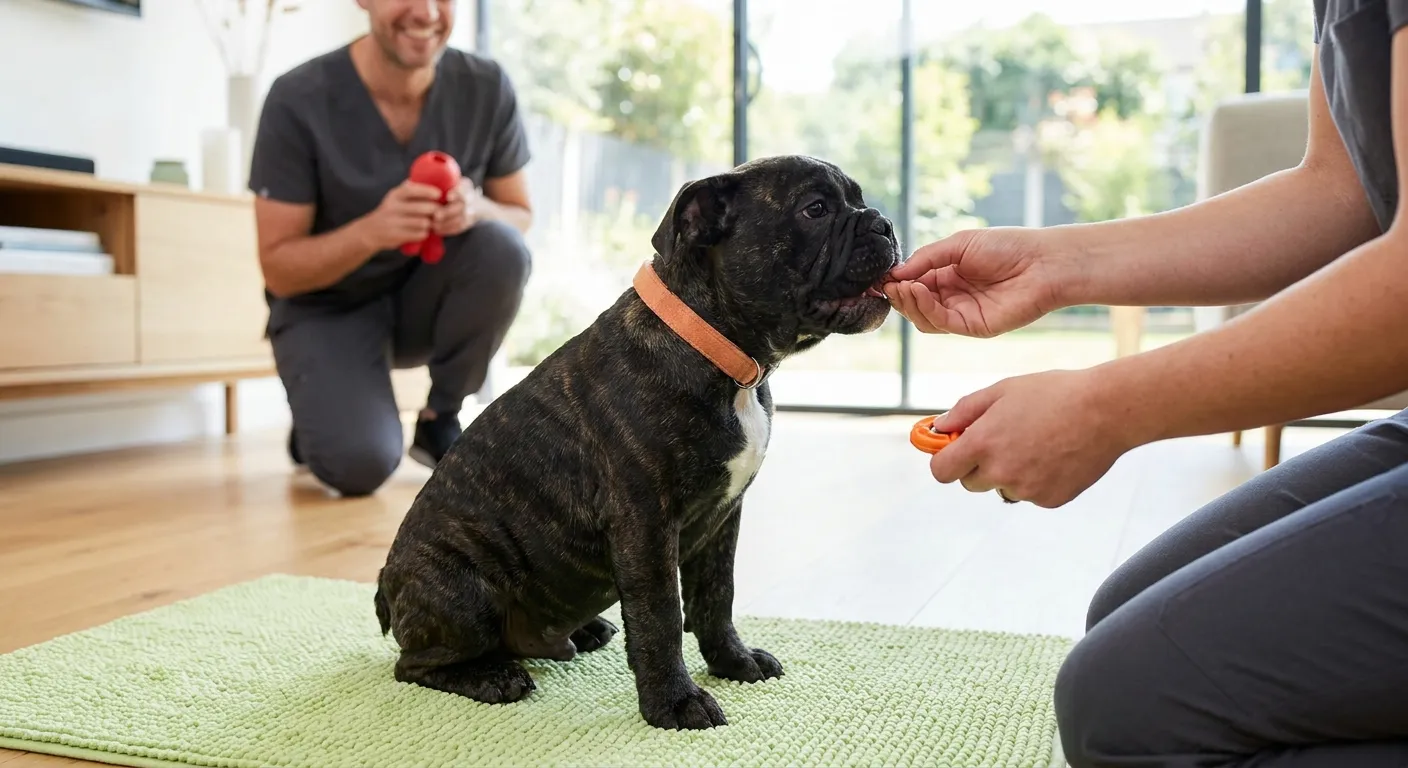
Bulldogs respond beautifully to positive reinforcement. This method involves rewarding desired behaviors with treats, praise, or toys. Avoid punishment, as it can damage trust and lead to fear or aggression. Instead, focus on making training fun and rewarding. For example, when your puppy sits, immediately say “Good sit!” and offer a small, high-value treat. This creates a clear association between the action and the reward. Consistency is truly key in this process.
Starting Leash Training Early
Introduce a lightweight collar and leash to your bulldog puppy as soon as possible. Allow them to wear the collar for short periods, gradually increasing the time. Once comfortable, attach the leash and let them drag it around indoors under supervision. Then, begin short, positive walks in a quiet area. Teach them to walk calmly beside you, rewarding loose-leash walking. This early exposure makes future walks much more enjoyable for both of you. Remember to keep sessions brief and positive to prevent any negative associations.
House Training and Crate Training Essentials
House training and crate training are fundamental aspects of early bulldog puppy training. They provide structure, safety, and help establish routines that are beneficial for both you and your puppy. Furthermore, these practices contribute significantly to a clean and harmonious home environment.
Successful House Training Techniques
Establish a consistent potty schedule. Take your bulldog puppy outside frequently: first thing in the morning, after waking from naps, after meals, and before bedtime. Always go to the same spot and reward them immediately with praise and a treat when they eliminate outside. Clean up any indoor accidents thoroughly using an enzymatic cleaner to remove odors that might attract them back to the same spot. This proactive approach minimizes mistakes and reinforces good habits. In addition, supervising your puppy closely indoors will help prevent accidents.
The Benefits of Crate Training
Crate training, when done correctly, provides a safe, den-like space for your bulldog puppy. It aids in house training by leveraging their natural instinct not to soil their sleeping area. Introduce the crate gradually, making it a positive place with treats and toys. Never use the crate as punishment. A properly introduced crate can become a secure retreat for your puppy and a valuable tool for managing their behavior, especially during times when you cannot supervise them directly. For instance, a comfortable chew toy inside the crate can make it more appealing.
Addressing Common Bulldog Puppy Behaviors
Bulldog puppies, like all puppies, exhibit certain behaviors that require gentle guidance and consistent training. Understanding and addressing these behaviors early on is a vital part of comprehensive early bulldog puppy training.
Nipping and Biting Prevention
Puppies explore the world with their mouths, but nipping can become problematic if not managed. When your bulldog puppy nips too hard, immediately yelp loudly and withdraw attention for a few seconds. This teaches them bite inhibition. Offer appropriate puzzle toys or chew toys as alternatives. Consistently redirecting their biting to toys helps them learn what is acceptable to chew. Remember, consistency is key to helping them understand boundaries.
Managing Chewing Habits
Chewing is a natural puppy behavior, especially during teething. Provide a variety of safe, durable chew toys to satisfy this urge. Rotate toys to keep them interesting. Puppy-proof your home by removing anything valuable or dangerous that your puppy might chew. If you catch your puppy chewing something inappropriate, calmly redirect them to an approved chew toy and praise them when they chew the correct item. This teaches them what is acceptable. For instance, consider robust chew toys designed for strong chewers.
Advanced Tips for a Well-Adjusted Bulldog
Beyond the basics, there are additional strategies you can employ to ensure your bulldog develops into a truly well-adjusted and obedient companion. These advanced tips complement your early bulldog puppy training efforts.
Consistency and Patience: Your Best Tools
Bulldogs thrive on routine and consistency. Ensure all family members use the same commands and training methods. Patience is also paramount; your puppy is learning a new language. There will be setbacks, but persistent, positive training will yield results. Celebrate small victories and remain calm during challenges. This creates a predictable and secure environment for your growing puppy. Moreover, consistency helps prevent confusion and reinforces good habits.
Understanding Bulldog Temperament
Bulldogs are known for their calm, friendly, and sometimes stubborn nature. Tailor your training approach to their personality. Keep training sessions short, fun, and engaging to maintain their attention. Understand that they may not be as quick to respond as some other breeds, but with persistence, they will learn. Respecting their unique temperament will make the training process more enjoyable for both of you. For further insights into canine behavior, resources like the American Kennel Club offer valuable information.
The Long-Term Benefits of Early Training
Investing time and effort into early puppy guidance pays dividends throughout your bulldog’s life. A well-trained bulldog is a joy to live with, less prone to behavioral problems, and can accompany you to more places. This foundation of good behavior fosters a stronger bond between you and your pet, leading to a happier, healthier life for everyone involved. For example, a well-behaved bulldog is easier to take for veterinary visits or to social gatherings. Consequently, you will enjoy a more fulfilling relationship with your furry friend.
Building a Stronger Bond
Training isn’t just about commands; it’s a powerful way to communicate and build trust. Through consistent training, your bulldog learns to understand your expectations, and you learn to understand their signals. This mutual understanding strengthens your bond, creating a partnership built on respect and affection. Furthermore, shared positive experiences during training deepen your connection. This bond is invaluable for a lifetime of companionship.
Preventing Future Behavioral Issues
Many adult dog behavioral problems stem from a lack of proper early training and socialization. By addressing these needs during puppyhood, you significantly reduce the likelihood of issues like aggression, separation anxiety, or destructive chewing. Early intervention is always more effective than trying to correct ingrained bad habits later on. For instance, proper early training can prevent your bulldog from becoming overly possessive of their toys or space. The ASPCA provides useful information on common dog behavior issues and prevention.
Conclusion
Early bulldog puppy training is one of the most important investments you can make in your bulldog’s future. From essential socialization to mastering basic commands and establishing good habits, every step contributes to raising a confident, well-behaved, and cherished family member. Remember to be patient, consistent, and always use positive reinforcement. By setting a strong foundation during these critical early weeks, you are paving the way for a lifetime of happiness and companionship with your beloved bulldog. For more tips on overall care, check out our Blog.
FAQ
When should I start training my bulldog puppy?
Ideally, you should begin training your bulldog puppy as soon as you bring them home, usually around 8 weeks of age. This period is crucial for their development and learning.
What are the most important commands to teach first?
Focus on essential commands like sit, stay, come, and down. These commands are vital for their safety and for establishing clear communication.
How long should training sessions be for a young bulldog?
Keep training sessions short and frequent, typically 5-10 minutes, several times a day. Puppies have short attention spans, so brief, positive sessions are more effective.
Can bulldogs be stubborn during training?
Bulldogs can sometimes be perceived as stubborn, but they are intelligent. They respond best to positive reinforcement and consistent, patient guidance. Avoid harsh methods.
Is crate training beneficial for bulldog pups?
Yes, crate training is highly beneficial. It aids in house training, provides a safe den for your puppy, and can help prevent destructive behaviors when you can’t supervise them.