
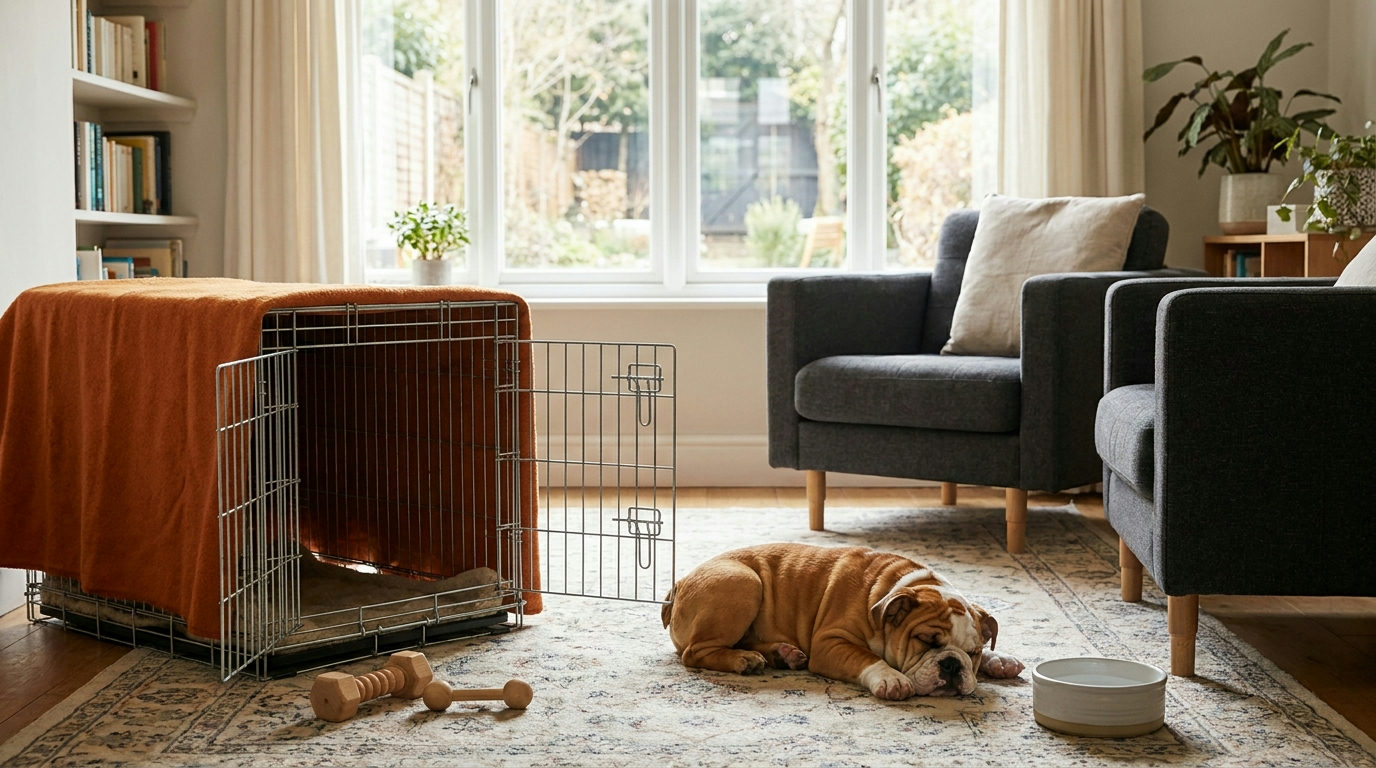
Bulldog crate training as a safe space routine should follow the dog’s comfort, not a fixed calendar. Begin with a suitable crate that your Bulldog can investigate voluntarily, then practise later stages gradually with appropriate help. Entering for food, accepting a door movement and resting while you move away are separate observations.
This is general training information, not veterinary advice. Ask your vet about health, toileting needs and suitable care during absences. Stop a difficult exercise if the dog is distressed, and seek professional guidance rather than insisting that every dog must adapt through the same sequence. A crate is one possible arrangement, not a requirement for every household.
Check the starting arrangement
Dogs Trust’s crate guidance describes correctly assembled equipment, comfortable space and a gradual introduction. Before training, review the exact crate’s instructions and the room position. Your Bulldog needs an appropriate arrangement for its size and care, including fresh water and suitable supervision.
Prepare an open-door stage using a secure method supported by the equipment. Keep the area free of nearby items the dog could reach or pull inside. Choose a reward suitable for the individual dog and count edible rewards within the feeding plan agreed with the vet. Do not begin by shutting the door and waiting to see what happens.
Write the starting task on a card: approach the open crate, investigate the doorway or practise an already comfortable entry. Choose the stage the dog is ready for. A crate used happily by a previous dog is still new to this one, and a newly adopted adult can need an individual plan just as a puppy does.
Practise a voluntary approach
Let your Bulldog move around the familiar room and investigate the crate at its own pace. Reward a comfortable approach where appropriate, without using the reward to trap it inside. Keep your own position out of the doorway so the dog can choose to leave. An initial exercise can end before entry occurs.
Record the observable response: approached the side, sniffed the opening, stepped inside or moved away. Do not replace the observation with a label such as stubborn. If the dog avoids the location, check whether the room, equipment movement or another animal could be affecting the situation and ask a trainer for help.
Keep this exercise separate from the door task. A person should not close the door as a surprise the moment the dog enters. The next caregiver needs to know that comfortable approach is the current stage. Share that instruction explicitly rather than assume everyone understands a treat placed in the crate means keep the door open.
Establish comfortable entry and exit
AKC’s step-by-step guide describes gradual entry, door introduction and later duration and distance work. Use the staged principle without borrowing a promised completion time. Ask a qualified trainer to demonstrate the appropriate exercise if you are unsure how to invite entry without pressure.
Let the dog leave again. Watch whether it can move comfortably and whether any equipment or item interferes. An entry that occurs only when the animal is physically guided inside does not show the same choice as a voluntary approach. Avoid carrying the dog in simply to obtain a successful-looking log entry.
When entry becomes familiar, decide with the trainer whether a cue is useful and how to introduce it. Keep the cue consistent among caregivers. A word repeated from across the room does not establish that the dog understands the behaviour. Record the current exercise rather than add a cue, door movement and absence to the same attempt.
Introduce door movement as a separate exercise
Demonstrate the equipment’s movement without the dog confined first so you understand the fastenings and sound. When an appropriate training plan reaches this stage, make the small door movement the trainer has shown and return to the comfortable arrangement. Keep your attention on the dog’s response rather than completing the full movement because you planned it.
If the movement startles the dog or causes avoidance, stop and discuss an easier introduction. Do not latch the door to prevent the animal leaving an uncomfortable exercise. Door movement and closed-door rest are separate stages; a quiet response to one movement does not prove readiness for a long stay.
Write exactly what changed: door moved slightly while dog remained comfortable, or dog left when the equipment made a sound. This detail can guide professional help. You do not need to reproduce the sound repeatedly to confirm that it caused concern. One clear observation is enough to pause and review the plan.
Build a short comfortable closed-door stage
The RSPCA’s crate advice emphasises positive small steps and warns against using the crate as punishment or an all-day work arrangement. Follow an individual plan for the first closed-door practice. There is no universal duration that establishes every Bulldog’s readiness.
Remain nearby for the stage you have agreed with the trainer. Observe whether the dog can remain comfortable with the door closed and reopen it as the exercise requires. Do not extend the stay because the first part looked easy. Keep toileting, water and other care needs in the plan rather than treat them as interruptions to training.
If the dog wakes and vocalises, consider its care needs and seek advice rather than assuming that a training rule explains every sound. Do not withhold a necessary toileting opportunity to enforce silence. If behaviour or breathing is concerning, attend to welfare and contact the veterinary team as appropriate.
Add movement away without adding a long absence
Only practise distance when the earlier stage is comfortable and an appropriate plan supports it. A small change in your position is different from leaving the dog alone for a normal work shift. Ask the trainer how to change one demand at a time and how to observe the response.
VCA’s confinement guidance discusses monitoring early separations and ending a session when significant distress occurs, followed by professional advice. A camera can provide an observation if used appropriately, but it is not a substitute for available care or a reason to continue an unsafe absence.
Record what the dog actually did while you moved. Resting quietly in one short exercise does not prove comfort with every future absence. If the dog cannot cope, discuss an alternative arrangement and further assessment. Do not keep increasing duration to see whether the problem disappears through exhaustion.
Respond to setbacks through the last comfortable step
Review a difficult session for changes in the room, routine, equipment or care needs. Bring specific observations to the trainer or vet. A setback can be information that the plan needs adjustment; it does not justify punishment or make the dog responsible for failing a timetable.
Keep the log practical: starting stage, single change, response and next question. Avoid a rule that every later session must be harder than the earlier one. Comfortable familiar practice can remain part of the plan. If the animal shows significant distress, pause further confinement exercises until you have appropriate professional guidance.
Share the routine before another person takes over
Give a sitter the current stage and the care arrangement in writing. State which tasks are not yet appropriate, where the dog can rest and how toileting and supervision are provided. Do not hand over a list of advanced exercises that the puppy has never practised. A caregiver should know what to do when the dog becomes uncomfortable.
Bulldog crate training as a safe space routine develops through individual, observable steps. Prepare the arrangement, encourage voluntary entry, separate door and distance work, and respond promptly to care needs or distress. Your next session should follow the last comfortable stage and professional guidance, with no promise that a particular number of days will produce a settled dog.