If you own a bulldog, you have probably experienced moments when your dog simply refuses to listen. Whether it is ignoring commands, stopping mid-walk, or doing the exact opposite of what you ask, bulldog stubborn behavior can test your patience. However, what seems like defiance is often misunderstood. Bulldogs are not trying to challenge you; instead, their behavior comes from specific traits that can be managed with the right approach.
Understanding bulldog stubborn behavior is the first step toward fixing it quickly. Once you recognize why your dog acts this way, you can shift your training style and see results faster. With a consistent and practical strategy, even the most stubborn bulldog can become more responsive and cooperative.
Why Bulldogs Seem So Stubborn
Bulldogs have a unique personality that sets them apart from many other breeds. While they are loyal and affectionate, they are also independent thinkers. This independence often leads to bulldog stubborn behavior, especially when they do not see a reason to follow a command.
In addition, bulldogs are known for conserving energy. They prefer comfort over unnecessary effort, which means they may ignore commands that require movement or activity. This is not laziness but rather a natural tendency to avoid exertion.
Furthermore, their strong will can make them appear uncooperative. However, this trait can be managed when you understand how to work with it instead of against it.
Lack Of Clear Motivation
One of the main causes of bulldog stubborn behavior is a lack of motivation. If your dog does not see a benefit in following a command, it is less likely to respond.
Unlike some breeds that respond quickly to praise alone, bulldogs often need a stronger incentive. Treats, toys, or positive reinforcement can make a big difference. When your dog associates commands with rewards, it becomes more willing to participate.
In addition, timing is important. Rewards should be given immediately after the desired behavior. This helps your dog understand the connection between the action and the reward.
By increasing motivation, you can reduce resistance and improve responsiveness.
Inconsistent Training Signals
Inconsistency can quickly reinforce bulldog stubborn behavior. If commands are not clear or rules change frequently, your dog may become confused.
For example, allowing certain behaviors one day and correcting them the next creates mixed signals. As a result, your dog may choose to ignore commands altogether.
Consistency is essential. Use the same commands, tone, and expectations every time. This clarity helps your dog understand what is required.
In addition, ensure that all family members follow the same approach. A unified system prevents confusion and strengthens training results.
Short Attention Span And Boredom
Bulldogs can lose interest quickly, especially if training sessions are too long or repetitive. This often leads to bulldog stubborn behavior because the dog disengages.
To address this, keep training sessions short and engaging. A few minutes of focused practice is more effective than extended sessions. In addition, vary activities to maintain interest.
Using games or interactive exercises can also help. When training feels enjoyable, your dog is more likely to participate willingly.
By keeping sessions dynamic, you reduce boredom and improve results.
Physical Discomfort Or Fatigue
Sometimes, bulldog stubborn behavior is linked to physical factors. Bulldogs are prone to breathing issues and can tire easily, especially in warm conditions.
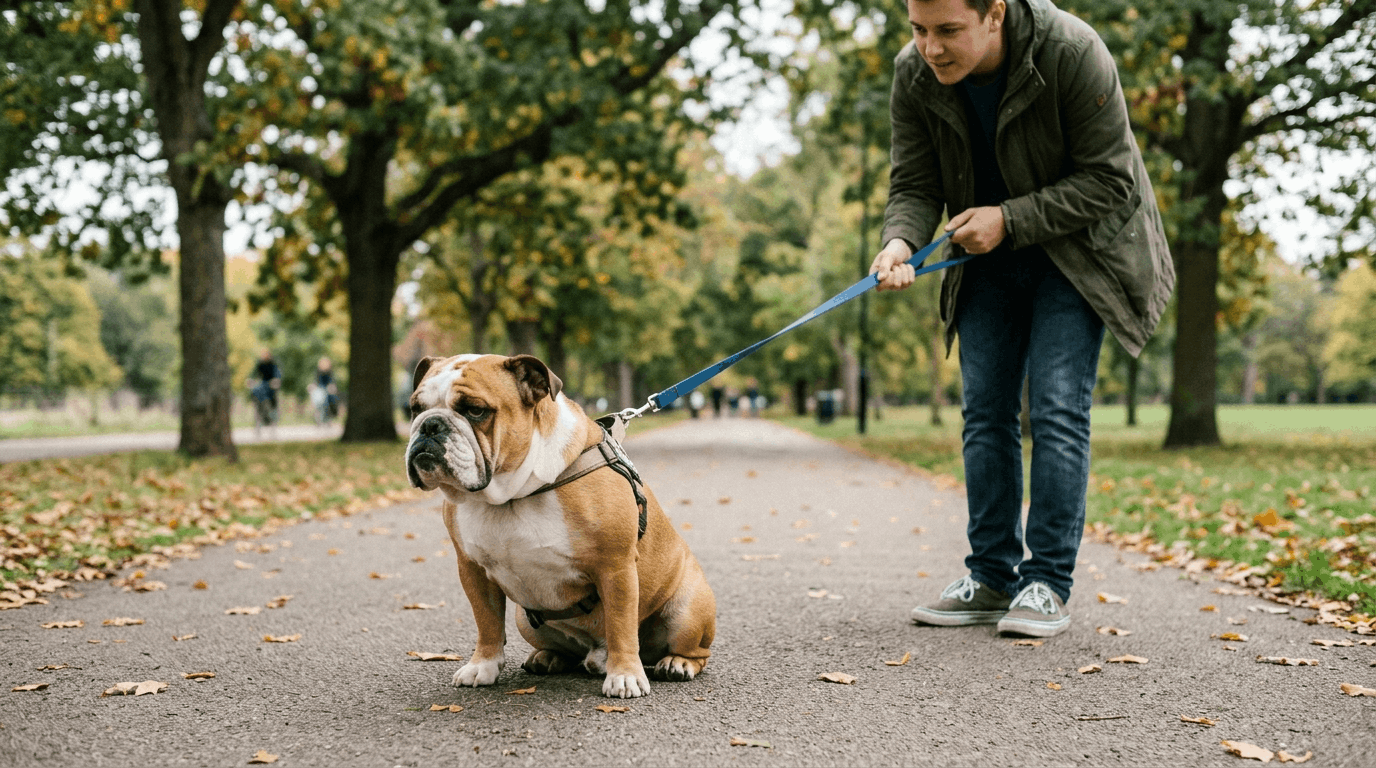
If your dog refuses to move or follow commands during walks, it may be due to discomfort rather than defiance. In these cases, pushing your dog can worsen the situation.
Instead, observe your dog’s condition. Adjust activity levels based on weather and energy levels. Providing rest and keeping sessions short can help maintain cooperation.
Understanding these limitations allows you to respond appropriately and avoid frustration.
How To Fix Bulldog Stubborn Behavior Fast
Fixing bulldog stubborn behavior does not require complex techniques. Instead, it involves simple adjustments that create clear communication and motivation.
Start by using positive reinforcement consistently. Reward desired behavior immediately to reinforce learning. In addition, use high-value treats that your dog finds appealing.
Next, keep commands clear and simple. Avoid repeating commands multiple times, as this can reduce their effectiveness. Instead, give the command once and guide your dog if needed.
Short, frequent sessions work best. Training for a few minutes several times a day helps maintain focus and prevents fatigue.
By applying these strategies consistently, you can see improvements quickly.
Build A Strong Routine
Routine plays a major role in reducing bulldog stubborn behavior. When your dog knows what to expect, it becomes more comfortable and cooperative.
Establish regular times for feeding, walks, and training. This predictability creates structure and reduces resistance.
In addition, incorporate training into daily activities. For example, ask your dog to sit before meals or wait before going outside. These small actions reinforce good behavior throughout the day.
By building a routine, you create a stable environment that supports consistent learning.
Use Patience And Calm Energy
Your energy influences your dog’s behavior more than you may realize. Frustration or impatience can increase bulldog stubborn behavior, making training more difficult.
Instead, stay calm and patient. If your dog does not respond immediately, take a moment to reset rather than reacting negatively. This approach helps maintain a positive training environment.
In addition, avoid punishment-based methods. Bulldogs respond better to encouragement than correction. Positive reinforcement builds trust and improves cooperation.
By maintaining calm energy, you create a more effective training experience.
Avoid Common Training Mistakes
Certain mistakes can reinforce bulldog stubborn behavior without you realizing it. One common issue is giving in when your dog refuses a command. This teaches your dog that ignoring you works.
Another mistake is overusing commands. Repeating instructions without action reduces their impact. Instead, ensure that each command is followed through.
In addition, avoid long or tiring sessions. Fatigue can lead to resistance, making training less effective.
By recognizing and correcting these mistakes, you improve your results significantly.
Stay Consistent For Long Term Results
Consistency is the key to overcoming bulldog stubborn behavior. While quick improvements are possible, long-term success depends on maintaining your approach.
Continue reinforcing positive behavior and following your routine. Over time, these habits become natural for your dog.
In addition, remain adaptable. If something is not working, adjust your method while keeping your overall strategy consistent.
By staying committed, you create lasting change and build a stronger relationship with your dog.
Conclusion
Bulldog stubborn behavior can feel challenging, but it is completely manageable with the right approach. By understanding the reasons behind it and applying simple, consistent techniques, you can improve your dog’s responsiveness quickly.
Instead of viewing stubbornness as a problem, see it as a trait that requires the right guidance. With patience, motivation, and structure, your bulldog can become more cooperative and easier to train.
Over time, these efforts lead to a more balanced and enjoyable relationship. With the right mindset, you can turn stubborn behavior into an opportunity for growth and connection.
FAQ
- Why do bulldogs ignore commands sometimes?
They may lack motivation or feel tired, which affects their willingness to respond. - Can stubborn behavior be trained out completely?
It can be managed effectively with consistent training and positive reinforcement. - How long should training sessions be for bulldogs?
Short sessions of a few minutes work best to maintain focus and prevent fatigue. - Are bulldogs harder to train than other dogs?
They can be more independent, but they respond well with the right approach. - What is the fastest way to improve obedience?
Use consistent rewards, clear commands, and short training sessions daily.