Bulldogs carry a lot of solid dog on four short legs, and their paws do plenty of work. They walk on hot pavements in summer, wet grass in autumn and gritty paths in winter. Yet paws are easy to overlook next to wrinkles and breathing. A short, regular bulldog paw care routine helps you notice small problems early, keeps your dog comfortable and makes handling easier for nail trims and vet visits. Here’s how to build one.
Disclaimer: This content is for informational purposes only and is not a substitute for professional veterinary advice. If your dog is limping, licking a paw constantly, or you see swelling, a wound or bleeding, contact your veterinarian.
Why paws deserve a weekly check
Paws pick up whatever the ground offers. The American Kennel Club (AKC) notes that salt and dirt can build up between a dog’s toes, around and between the pads and under the nails, which can lead to irritation. Tufts University’s Your Dog newsletter also suggests checking between your dog’s toes regularly, because small objects such as pebbles or bits of glass can lodge there.
A weekly look takes a minute or two. Pick a calm moment, perhaps after an evening walk, and make it part of your normal grooming. If you already do a wrinkle routine, our bulldog grooming guide shows how paws fit into the bigger picture.
Step 1: Get your bulldog comfortable with paw handling
Some bulldogs are happy to offer a paw. Others pull away the moment you reach for their feet. Either way, short, positive practice makes everything easier.
- Touch a paw briefly, then give a treat.
- Hold the paw for a second or two, then treat.
- Gently spread the toes, then treat.
- Touch a nail with your finger, then treat.
Keep sessions very short and stop while your dog is still relaxed. Do a little every day for a week or two before you attempt a full check. Our guide to positive bulldog training explains how to time rewards well.
Step 2: Look at the pads
With your dog lying or sitting comfortably, look at each pad in good light. You’re looking for anything that’s changed since last week, such as:
- Cuts, scrapes or small punctures.
- Dry, rough or cracked patches.
- Redness or swelling.
- Anything stuck to the pad, like sap, gum or burrs.
The AKC describes cleaning time as a good opportunity to check for cuts, scrapes or dry and cracking pads, and suggests a soothing paw balm or protective paw wax to help with dryness. Choose a product made for dogs. Tufts notes that human hand moisturisers might soften the pads too much.
Step 3: Check between the toes
Gently spread each toe and look between them. This is where grit, grass seeds and small stones like to hide. The AKC advises parting your dog’s toes as you clean to check for debris and irritation, and then drying thoroughly.
Bulldogs have short coats, but some have a little hair between the pads. Tufts suggests trimming the hair between the pads so it sits even with them. If you’re not confident with scissors near your dog’s feet, a groomer can do it for you.
While you’re there, notice any redness, a bump between the toes, or a paw your dog keeps licking. Those are worth mentioning to your vet rather than treating at home.
Step 4: Look at the nails
Nails grow steadily, and bulldogs who walk mostly on soft ground may not wear them down. Tufts recommends trimming nails every few weeks on average, and warns that very long nails can curve and grow back into the pads.
A simple check: when your bulldog stands on a hard floor, listen for clicking. Regular clicking usually means it’s time for a trim. If your dog dislikes having their feet handled, Tufts suggests a groomer can trim them, either with clippers or a grinder, depending on what your dog tolerates. Ask your vet or groomer to show you how to trim safely before trying it yourself, so you avoid the sensitive part of the nail.
Step 5: Clean and dry after walks
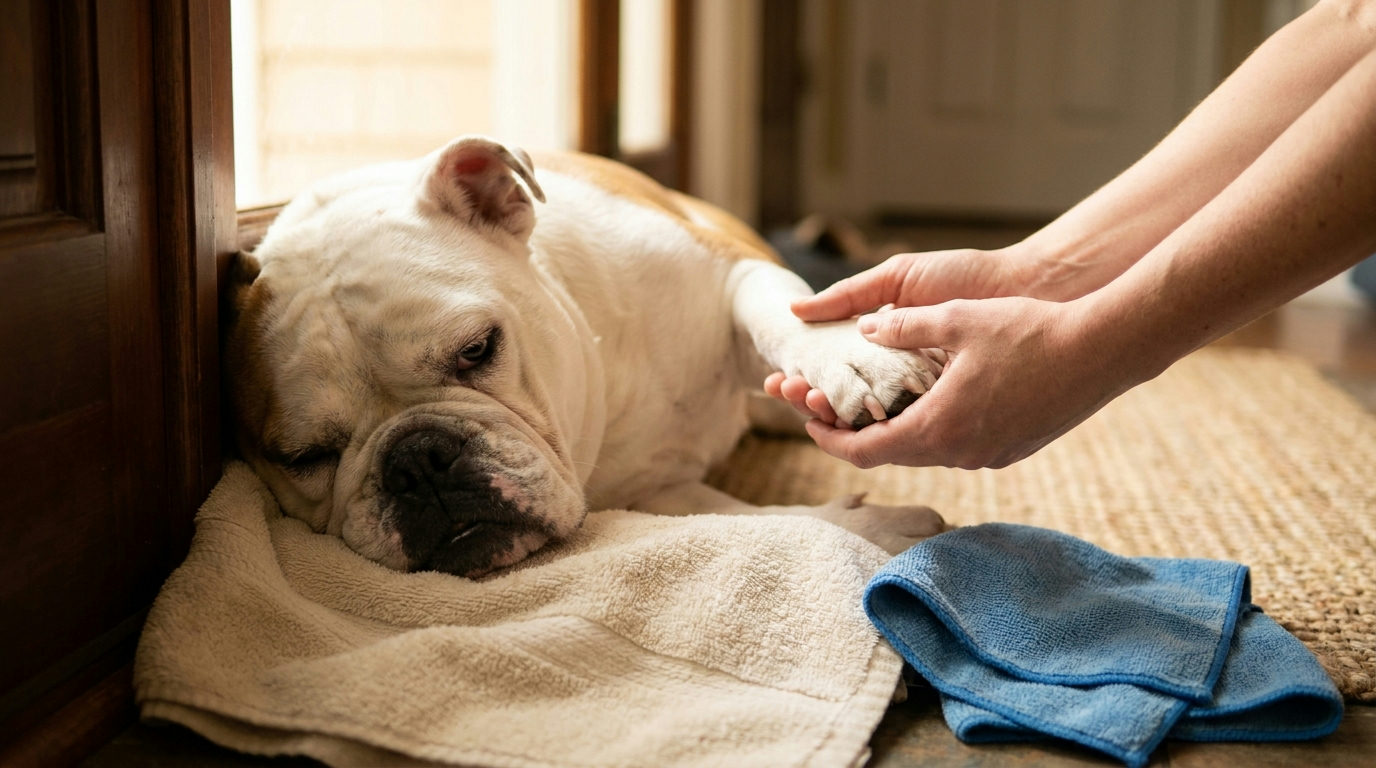
The AKC lists several ways to clean muddy or salty paws, including dog wipes, a quick rinse in the bath or with a detachable shower head, and portable paw cleaners. Whatever you use, the key step is the same: dry the paws thoroughly afterwards, especially between the toes. The AKC notes that a quick towelling with an absorbent microfibre towel can also help stop your dog slipping on hard floors.
Keep a towel and a pack of dog wipes by the door. A thirty-second wipe and dry after each walk becomes second nature quickly. Because bulldogs sit low to the ground, give their belly and legs a quick wipe too.
Seasonal bulldog paw care
Autumn and winter
Wet leaves, mud, grit and de-icing products all end up on your dog’s feet. The AKC suggests dog booties as one of the easiest ways to protect paws from the elements, noting that most dogs adapt with patience and rewards. Wipe and dry paws after every walk, and check pads for cracks. For more cold-weather tips, see our guide to cold weather bulldog care.
Spring and summer
Hot pavements can be uncomfortable for paws, and bulldogs already need careful heat management. Walk in the cooler parts of the day, stick to grass and shade where you can, and test the pavement with the back of your hand before setting out. Check between the toes after walks in long grass for seeds.
Keep their environment paw-friendly
Prevention is easier than treatment. Sweep up broken glass or sharp debris in your yard, keep garden tools and gravel edging tidy, and choose walking routes with soft, even ground where possible. Indoors, rugs on slippery floors give a heavy, short-legged dog better grip. If your bulldog is older, good grip at home can make a real difference to their confidence.
Getting used to booties
Booties can be a handy tool, but most bulldogs need an introduction. The AKC notes that it may take a little time for a dog to get used to booties, and that patience and rewards help. Start indoors. Let your dog sniff the booties, then put one on for a few seconds and reward. Build up to all four, then a short walk around the house, then a short walk outside. Check the fit after each outing: a bootie should stay put without rubbing or pinching, and your dog should move naturally. Bulldogs have broad, compact feet, so measure the width of each paw before buying rather than relying on general size labels.
Make paw care part of bonding time
Paw care doesn’t have to feel like a chore. Tufts suggests a gentle paw massage, rubbing the pads in a slow circular motion and then working between the toes. Many dogs find it relaxing, and it gives you a natural moment to notice anything new. Pair it with a quiet evening on the sofa, and your bulldog may start offering their paws for attention.
When to call the vet
Home paw care is about prevention and early spotting, not treating injuries. Contact your vet if you notice:
- Limping or reluctance to put weight on a foot.
- A wound, bleeding or something embedded that you can’t easily remove.
- Swelling, a lump or a sore spot between the toes.
- Constant licking or chewing at one paw.
- A nail that’s broken, split or growing into the pad.
Your bulldog paw care checklist
- Practise short, rewarding paw-handling sessions.
- Check pads and between toes once a week.
- Listen for clicking nails and trim or book a groomer.
- Wipe and dry paws, legs and belly after walks.
- Use a dog-specific balm for dry pads.
- Adjust for seasons: booties in winter, cool routes in summer.
- Call your vet for limping, wounds, swelling or constant licking.
A good bulldog paw care habit takes only a few minutes a week, and it pays off every time your dog trots happily beside you.
Sources are linked throughout. Always follow your own veterinarian’s advice for your dog.