Bulldogs famously struggle in the heat, so many owners breathe a sigh of relief when the weather cools. But cold brings its own challenges for a dog with a short, single coat and a low-slung body close to wet ground. Good cold weather bulldog care is about small, steady adjustments: shorter walks on bitter days, a coat when it helps, clean dry paws, and a warm, draught-free place to rest. This guide covers the practical steps to keep your bulldog comfortable from the first frost to the last.
Disclaimer: This content is for informational purposes only and is not a substitute for professional veterinary advice. Ask your veterinarian about your own dog’s tolerance for cold and any health conditions that might affect it.
Know your bulldog’s limits
Every dog handles cold differently. The American Veterinary Medical Association (AVMA) advises owners to know their pet’s tolerance for the cold and adjust accordingly, to shorten walks in very cold weather, and to talk to their veterinarian about their pet’s risks in cold weather. That last point is a good place to start, especially if your bulldog is very young, older, or managing a health condition.
In everyday terms, watch your dog rather than the thermometer. A bulldog who slows down, lifts their paws off cold ground, hunches up or tries to turn for home is telling you something. The AVMA’s guidance is to contact your veterinarian if your pet is shivering or extremely lethargic after being out in the cold.
Rethink the daily walk
Cooler months can be a lovely time to walk a bulldog, because the heat risk drops away. On genuinely cold days, though, short and frequent beats long and ambitious. Try two or three brief outings instead of one long one, and plan routes that keep you close to home.
- Time it well. Midday is often the warmest part of a winter day. Save early-morning and late-evening walks for milder weather.
- Keep it steady. A gentle, sniffy walk keeps your bulldog moving without overdoing it. Our guide to safe bulldog exercise routines has ideas for low-impact activity.
- Stay visible. Winter means darker walks, so a reflective harness or a small clip-on light helps drivers see a low, stocky dog.
- Avoid frozen water. The AVMA advises staying away from frozen ponds, lakes and streams.
Coats and sweaters: when they help
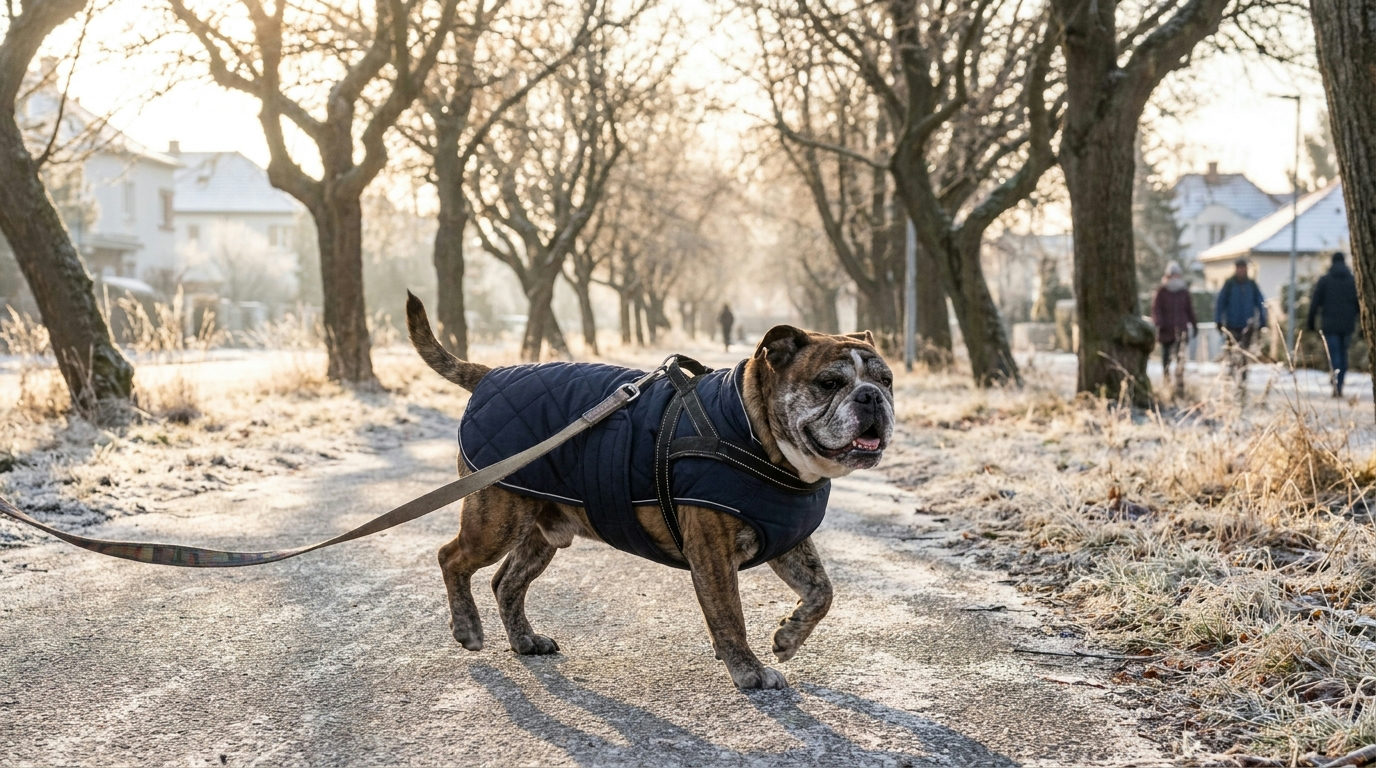
The AVMA suggests considering a sweater or dog coat if your dog has a short coat or seems bothered by the cold. Many bulldogs fit that description. The trick is finding one that actually fits a bulldog’s shape.
Fit tips for bulldogs
Bulldogs have a broad chest, a thick neck and a relatively short back. Standard sizes often fit one part and pinch another. Measure your dog’s neck, chest at its widest point and back length before you buy, and use the chest measurement as your guide. Look for:
- A neckline that sits loosely and never presses on the throat.
- Armholes and straps that don’t rub under the front legs.
- Easy fastening, so you’re not wrestling your dog into it.
- Water-resistant outer fabric for wet days.
Introduce the coat indoors with treats first, and check for rubbing after the first few walks. Take it off once you’re back inside so your dog doesn’t overheat.
Paw care in cold, wet weather
Paws take the brunt of winter walks. The AVMA recommends checking your dog’s paws frequently for signs of irritation or injury, and wiping down or washing your pet’s feet, legs and belly after walks to remove packed snow, ice, salt and de-icing chemicals. For a low-slung bulldog, the belly matters as much as the feet.
Keep a towel and a bowl of lukewarm water by the door. After each walk:
- Wipe each paw, including between the toes.
- Wipe the legs and underside.
- Dry everything thoroughly, especially skin folds and the spaces between toes.
- Take a quick look at the pads for cracks or redness.
The AVMA also suggests considering booties, as long as they fit well. Some bulldogs take to them quickly. Others need a few short indoor practice sessions with treats. At home, the AVMA recommends using pet-safe de-icing products on your own paths and steps.
Skin folds need extra drying
Winter often means damp dogs. Rain, wet grass and snow all find their way into a bulldog’s facial wrinkles and tail pocket. After wet walks, add a quick fold check to your paw routine and dry each fold gently with a soft cloth. If you need a refresher, our guide to bulldog skin fold care routines walks through it step by step.
A warm, draught-free place to rest
Your bulldog will spend more time indoors in winter, so their resting spot matters. Raise the bed slightly off cold floors, or add an extra layer of blanket underneath. Keep it away from doors and draughty windows. If your dog likes to burrow, a bed with raised sides or a soft blanket they can pull around themselves helps.
Be careful with heat sources. Keep your dog a safe distance from fireplaces and space heaters, and make sure cords are out of reach so they can’t be chewed or knocked over. A warm room is better than a hot spot.
The AVMA also recommends that dogs be kept inside during cold weather, and that any outdoor pets have insulated shelter and unfrozen water, with even outdoor pets brought inside in extreme cold. For a bulldog, indoors is the right default.
Car and garage safety in winter
The AVMA advises only taking your pet in the car when absolutely necessary in cold weather and never leaving a pet unattended in a vehicle. It also recommends cleaning up any antifreeze spills quickly. If your bulldog likes to follow you into the garage, keep them out while you’re working on the car or topping up fluids. Our guide to fall dangers for bulldogs covers garage hazards in more detail.
Keeping your bulldog busy indoors
Shorter walks can mean a restless dog. Indoor games keep your bulldog’s mind busy without long stretches in the cold. Try hiding a few treats around a room for a sniffing game, using a puzzle feeder for part of a meal, or practising a few simple cues in short, upbeat sessions. Ten minutes of brain work can be as satisfying as a longer walk.
Be ready for winter storms
Cold weather can also bring storms and power cuts. The AVMA recommends having an emergency kit that includes your pet’s needs in case of severe weather or a prolonged outage. For a bulldog, that means food, any medications, water, a spare blanket, waste bags, copies of vet records and your vet’s contact details, all in one easy-to-grab bag.
Your cold weather bulldog care checklist
- Shorten walks on very cold days and watch your dog’s signals.
- Use a well-fitted coat if your dog seems bothered by the cold.
- Wipe and dry paws, legs and belly after every walk.
- Dry skin folds after wet outings.
- Raise the bed off cold floors and away from draughts.
- Keep heaters, fireplaces and antifreeze out of reach.
- Pack a winter emergency kit.
- Ask your vet about any extra precautions for your dog.
Cold weather bulldog care doesn’t need to be complicated. A few small habits keep your dog warm, dry and comfortable, so you can both enjoy the cooler months.
Sources are linked throughout. Always follow your own veterinarian’s advice for your dog.