Between wrinkles, ears and paws, there’s one corner of a bulldog’s grooming routine that often gets forgotten: the tail. Many bulldogs have a small fold or pocket of skin at the base of the tail, and bulldog tail pocket care is simply the habit of looking at that spot, cleaning it gently if your vet suggests it, and drying it well. This guide gives you a calm, step-by-step routine you can fit into a weekly check, along with a short list of questions to take to your vet. It’s written for everyday owners, so you’ll find simple steps rather than clinical detail.
Disclaimer: This content is for informational purposes only and is not a substitute for professional veterinary advice. Ask your veterinarian about your individual dog, and about any product you’re thinking of using.
What is a tail pocket?
Some bulldogs have a fold of skin under or around the base of the tail. It may be shallow or deep, and not every bulldog has one. Because every dog is built a little differently, the best first step is to ask your vet whether your dog has a tail pocket, how deep it is and how often they’d suggest checking it.
If you’d like some general background, the UK charity PDSA publishes an overview of skin fold care in dogs. It’s worth a read, and your vet can explain how it applies to your own bulldog.
Start with a conversation with your vet
Tail pockets are easiest to understand when someone shows you in person. At your next check-up, ask your vet or a vet nurse to point out the area on your dog and demonstrate how they’d approach it. Seeing it once makes the routine at home much less daunting.
It’s also a good moment to ask which wipes or cloths they’d recommend, if any, and whether there’s anything that should be avoided for your dog. Skin can be sensitive, so it’s sensible to check before trying a new product rather than guessing.
What you’ll need
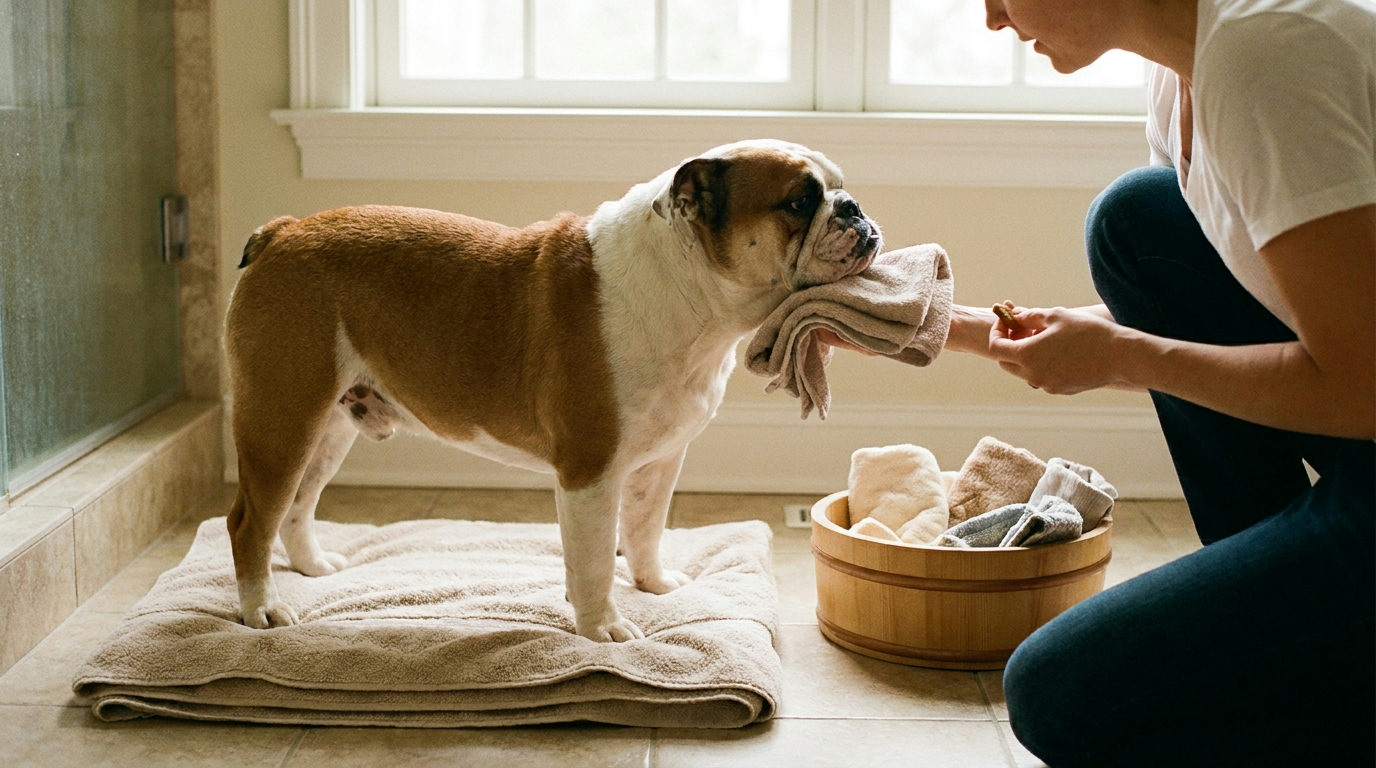
A simple kit keeps the routine quick and low-stress:
- A soft, clean cloth and a little warm water, or a wipe your vet has approved.
- A second dry cloth or soft towel for drying.
- Your dog’s favourite small treats.
- Good light, so you can see what you’re doing.
- A clean pair of hands. Wash them before you start.
Keep everything together in one small tub near where you do your other grooming, so it’s easy to grab.
Getting your bulldog used to tail handling
Many bulldogs are happy to have their ears or paws handled but tense up when someone touches their back end. A slow introduction helps. Spend a few days on each stage, and move on only when your dog seems relaxed.
- Touch the back, then reward. Stroke along your dog’s back and give a treat.
- Touch the base of the tail, then reward. Keep it brief and calm.
- Lift the tail briefly, then reward. Hold for a second or two and let go.
- Hold the tail up a little longer, then reward.
- Add the cloth. Let your dog sniff it first, then touch it lightly near the area and reward.
Stop while your dog is still relaxed. Our guide to positive bulldog training explains how to time rewards so your dog connects handling with good things.
A simple step-by-step tail pocket routine
Once your dog is comfortable, this is one calm way to work. Follow your vet’s advice if it differs, because they know your dog.
- Pick a quiet moment. After a walk or just before a meal can work well, when your dog is settled.
- Get your supplies ready and wash your hands.
- Ask your dog to stand or lie comfortably, and offer a treat.
- Lift the tail gently and take a look in good light. Notice how the area looks and smells today, so you can spot changes later.
- Wipe gently with a damp cloth or an approved wipe, working from the inside of the fold outwards. Use a light touch and a fresh part of the cloth each time.
- Dry thoroughly with the dry cloth, using pats rather than rubs.
- Reward and finish. Give a treat and some praise, then put your supplies away.
The whole routine usually takes only a couple of minutes once you and your dog have the hang of it.
Fitting tail pocket care into your week
Many owners find it easiest to attach tail checks to something they already do. Here’s one way to build a short weekly grooming round:
- Wrinkles and face: see our guide to bulldog skin fold care.
- Ears: our bulldog ear cleaning routine shows what to look for.
- Paws: try the weekly paw routine.
- Tail pocket: take a quick look and follow your vet’s advice on cleaning.
Doing everything in one short session, with treats, tends to feel more like a bonding moment than a chore.
Making it positive for a wriggly dog
If your bulldog wriggles, sits down or moves away, you’re not doing anything wrong. Some dogs simply need more time. A few things can help:
- Keep sessions short. A minute of calm handling is better than five minutes of struggle.
- Use a lick mat or a favourite chew to hold your dog’s attention while you take a look.
- Ask a helper to offer treats at the front while you check the back.
- Try again later. If your dog is restless, put the supplies away and come back another day.
- Watch your dog’s body language. Our guide to bulldog body language can help you tell when it’s time to stop.
Common mistakes to avoid
- Rushing the introduction. Skipping the handling steps can make a dog dislike the whole routine.
- Skipping the drying step. A damp fold is easy to miss, so make drying part of every session.
- Trying new products without asking. Check with your vet first, especially for anything scented or medicated.
- Forcing it. If your dog is upset, stop and try again another day.
- Ignoring changes. If the area looks or smells different from usual, or your dog seems sore, don’t wait for the next scheduled check-up.
When to check in with your vet
Home care is about noticing, not diagnosing. If anything about your dog’s tail area looks, smells or feels different from what you usually see, or your dog seems uncomfortable when you touch it, call your vet and describe what you’ve noticed. A clear note of when you first spotted it is useful.
Questions to ask your vet
A short list can make the appointment go further:
- Does my bulldog have a tail pocket, and can you show me where it is?
- How often would you suggest I check and clean it?
- Which wipes or cloths would you recommend, and are there any I should avoid?
- What should I do if my dog won’t let me touch the area?
- What changes would you like me to tell you about straight away?
- Would you like to see the area again at the next check-up?
Our guide to early bulldog health screenings has more ideas for things to raise at check-ups.
Quick tail pocket checklist
- Ask your vet to show you the area and recommend products.
- Introduce tail handling slowly, with treats.
- Wash your hands and use a soft, clean cloth.
- Wipe gently and dry thoroughly.
- Reward and keep sessions short.
- Call your vet if anything looks, smells or feels different.
The bottom line on bulldog tail pocket care
Bulldog tail pocket care doesn’t need to be complicated. Ask your vet to show you the area, introduce handling slowly, keep the routine short and gentle, and always dry well afterwards. Fit it into the weekly grooming round you already do, keep a few treats handy and check in with your vet whenever something seems different. That’s a simple, steady habit that keeps grooming time calm for both of you.
Sources are linked where used. Always ask your veterinarian about your individual dog.