One morning your bulldog looks up at you and there’s a small, red, swollen lump in the inner corner of one eye. It can look alarming, and many owners worry it’s an injury or a growth. One possible cause, especially in young dogs, is cherry eye. This guide is an owner’s companion to cherry eye in bulldogs: what the term means, what to do before the vet visit, what to ask, and how to manage the weeks that follow. Your vet is the one who diagnoses and treats it. Our job is to help you walk in prepared.
Disclaimer: This content is for informational purposes only and is not a substitute for professional veterinary advice. If you notice a change in your dog’s eye, book an appointment with your veterinarian.
What is cherry eye?
Dogs have a third eyelid, a thin membrane tucked inside the lower eyelid at the inner corner of the eye. A tear gland sits at its base. The American College of Veterinary Ophthalmologists (ACVO) describes cherry eye as that gland moving out of position and showing as a red or pink mass behind the eyelid. The nickname comes from how it looks: a little like a cherry in the corner of the eye.
The ACVO explains that this gland helps make tears, which is why vets take it seriously even when the dog seems unbothered. You’ll find the details on its page, and your vet can talk you through what it means for your own dog.
Bulldogs and cherry eye
The ACVO names the Bulldog among the breeds in which cherry eye is mainly seen in young dogs. PDSA, the UK veterinary charity, also lists it as more common in certain pedigree breeds. So if you share your life with a bulldog, it’s worth knowing what it looks like.
Nobody fully knows why some dogs develop it. VCA Animal Hospitals describes how the gland is normally held in place by a fibrous attachment. In other words, it isn’t something you caused. It sits alongside the other breed conditions in our guide to common bulldog health issues.
What cherry eye in bulldogs looks like
The giveaway is a red, swollen mass near the inner corner of the eye, close to the nose. VCA notes it can be large or small, and the ACVO mentions that it can come and go at first. One or both eyes may be involved.
Things owners often notice at the same time include:
- Rubbing or pawing at the eye.
- Redness around the eye.
- More tears or discharge than normal.
- Squinting or holding the eye partly shut.
VCA’s advice is to bring any mass in the eye to your vet’s attention promptly. Other eye problems can look alike, and only an exam can tell them apart, so treat this list as a reason to book, not a way to diagnose at home.
Before the appointment: three simple steps
1. Stop the rubbing
PDSA suggests a buster collar, or cone, to stop your dog rubbing the eye while you wait. Bulldogs have short faces and thick necks, so standard cones can sit awkwardly. Ask the clinic which style they’d recommend, and check it doesn’t press on the throat.
2. Ask about keeping the eye moist
When you call to book, ask whether you should use anything on the eye in the meantime. VCA mentions that vets sometimes suggest a lubricating product before surgery. Use only what your own vet advises.
3. Keep a short timeline
Note the date you first saw the lump, whether it has disappeared and returned, and any rubbing or discharge. A photo on your phone each day is ideal. It gives your vet useful history in a few seconds.
One more thing: don’t try to push the gland back in yourself unless your vet has shown you how and told you it’s suitable.
How vets usually treat it
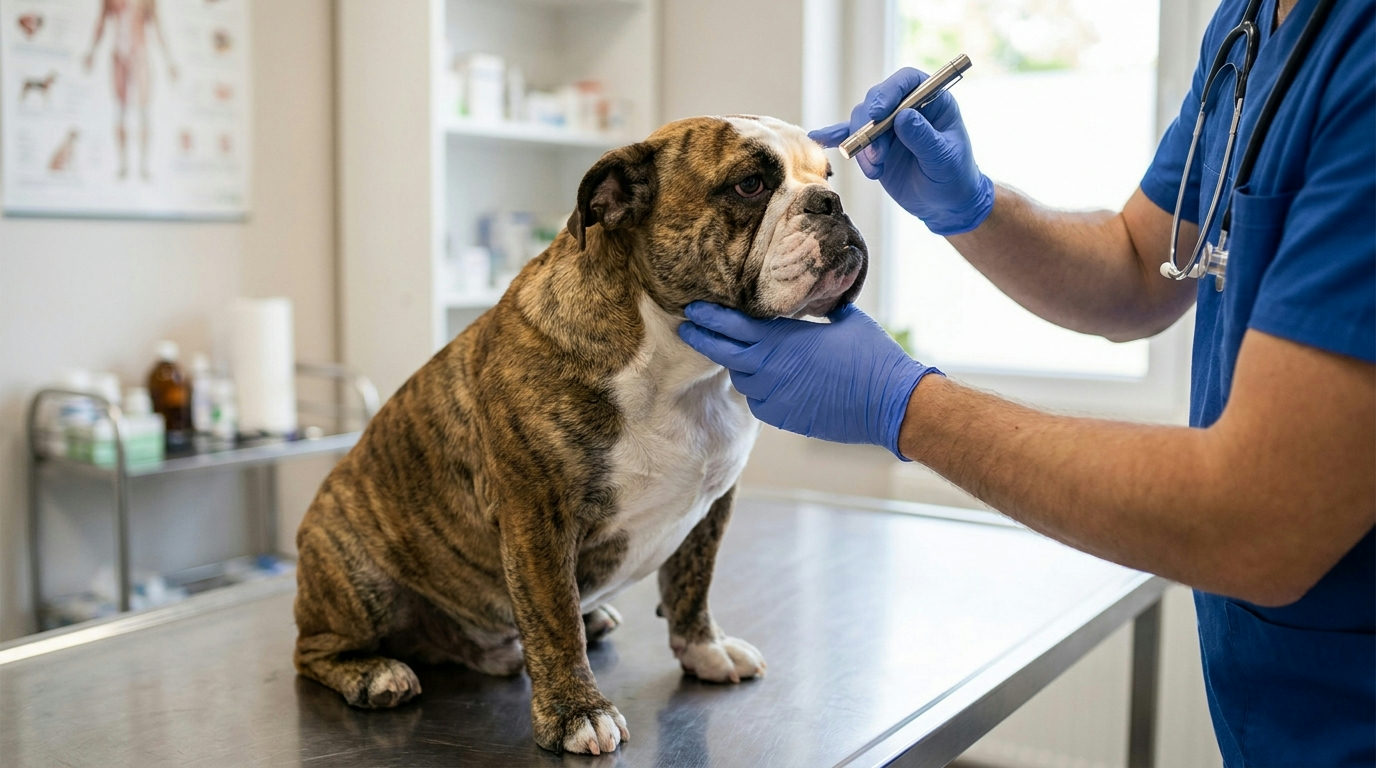
Treatment is your vet’s call, but it helps to know the general picture. The ACVO and PDSA both describe surgery to place the gland back where it belongs as the usual approach. PDSA explains that this is commonly done by stitching the gland into a pocket in the third eyelid.
You may read online that the gland used to be removed. The ACVO explains why replacement is now preferred, and it encourages early treatment. If you’d like to understand the reasoning, read the ACVO page and ask your vet to explain it for your dog. They may also suggest seeing a veterinary ophthalmologist.
Questions to take to your vet
A short written list keeps the appointment focused:
- Is this cherry eye, or could it be something else?
- What treatment do you recommend, and why?
- Would a veterinary ophthalmologist be helpful here?
- What does aftercare involve, and how long will my dog wear a cone?
- Should I watch the other eye?
- Are there any follow-up checks you’d like to schedule?
- How do you manage anaesthesia for a short-nosed breed like a bulldog?
That last question is worth asking for any procedure. Bulldogs are a brachycephalic breed, and your vet can explain the precautions their team uses.
Looking after your bulldog afterwards
Your vet’s aftercare instructions always come first. In general, recovery is about protecting the eye while it heals. That usually means keeping the cone on, giving any medication exactly as prescribed, and keeping your dog calm for a while. Swap tug-of-war and rough play for sniffing games and short, gentle walks.
Keep an eye on both eyes in the months that follow. VCA notes that some dogs later develop it on the other side, and PDSA mentions that your vet may want to recheck the eye from time to time. Call the clinic if you see swelling, heavy discharge, signs of discomfort or the lump coming back.
Making cone life easier for a bulldog
Cones and flat faces don’t always get along. A few small changes help. Raise food and water bowls slightly so the cone rim doesn’t hit the floor. Clear a wider path through the house so your dog doesn’t bump into furniture. Some owners find a soft or inflatable style more comfortable, but check with your vet that it still protects the eye. Finally, give your bulldog a little extra patience. Most dogs adjust once they learn how to move with it.
Planning ahead
There’s no known way to prevent cherry eye in bulldogs, so the best plan is to spot it early and act quickly. Regular check-ups help, and our guide to early bulldog health screenings explains what to cover with your vet in the first couple of years.
It’s also sensible to plan for the cost of unexpected care. If you’re thinking about pet insurance, read the policy wording on breed-related and hereditary conditions, and check any waiting periods, before you buy.
The bottom line
Cherry eye looks dramatic, but it’s a recognised condition that vets see regularly. Your role is straightforward: book a vet visit when you spot a lump, stop your dog from rubbing it, bring your questions, and follow the aftercare plan closely. That’s how you give your bulldog’s eyes the best possible care.
Sources are linked throughout. Always follow your own veterinarian’s advice for your dog.