Training a bulldog can feel like a test of patience, especially when your dog seems determined to ignore every command. However, if you want to train stubborn bulldog behavior effectively, the solution is not force or frustration. Instead, it is about understanding how bulldogs think and adjusting your approach to match their personality. Once you shift your mindset, training becomes far less stressful and much more productive.
Bulldogs are not naturally eager to please in the same way as some other breeds. They are independent, strong-willed, and often selective about when they respond. Still, that does not mean they cannot learn. When you learn how to train stubborn bulldog behavior using the right techniques, you create a system that works with your dog instead of against it. Over time, this leads to better results and a calmer experience.
Understand Why Bulldogs Resist Training
Before you train stubborn bulldog tendencies, it is important to understand why they happen. Bulldogs are naturally independent, which means they often evaluate whether a command is worth following. If they do not see a clear benefit, they may simply ignore it.
In addition, bulldogs tend to conserve energy. They prefer comfort and may resist actions that require effort. This behavior is not laziness but a built-in trait that influences how they respond.
Furthermore, bulldogs can be sensitive to tone and environment. If they feel pressured or confused, they may shut down instead of cooperating. By understanding these factors, you can adjust your approach and reduce resistance.
Set Realistic Expectations From The Start
If you want to train stubborn bulldog behavior successfully, you need to adjust your expectations. Bulldogs may not respond instantly, and that is normal. Expecting immediate obedience can lead to frustration.
Instead, focus on gradual progress. Small improvements matter more than perfect results. For example, a delayed response is still a step forward.
In addition, remember that consistency matters more than speed. Training may take longer, but steady progress leads to lasting behavior changes.
By setting realistic expectations, you create a more positive and manageable training experience.
Use Positive Reinforcement Consistently
One of the most effective ways to train stubborn bulldog behavior is through positive reinforcement. Bulldogs respond much better to rewards than to pressure or punishment.
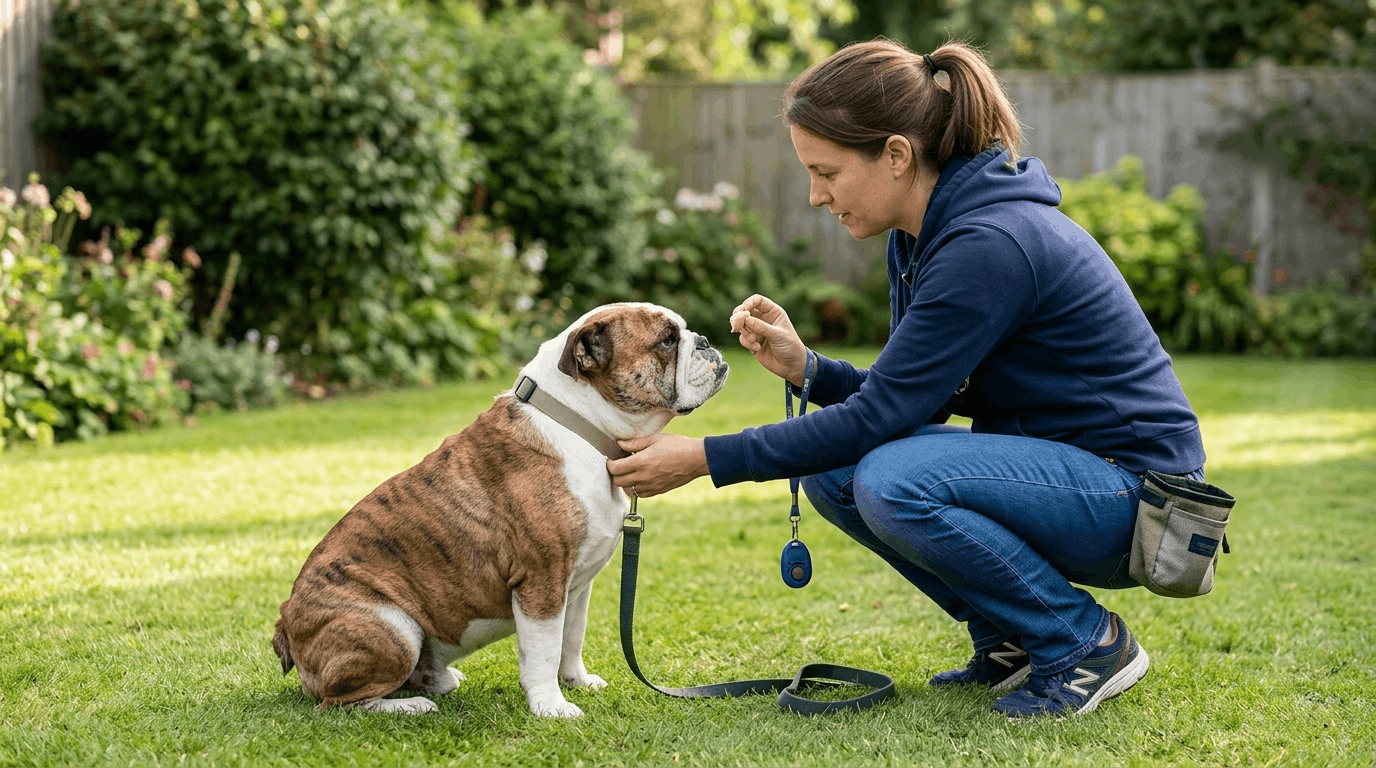
Use treats, praise, or toys to encourage desired behavior. When your dog associates commands with rewards, it becomes more motivated to cooperate. Timing is critical, so reward immediately after the correct action.
In addition, choose rewards your dog values highly. Not all treats are equally motivating, so experiment to find what works best.
By reinforcing positive behavior consistently, you create a system that encourages learning.
Keep Training Sessions Short And Focused
Long training sessions often lead to boredom, which increases stubborn behavior. To train stubborn bulldog tendencies effectively, keep sessions short and engaging.
A few minutes of focused training is usually enough. This keeps your dog interested and prevents fatigue. In addition, frequent short sessions throughout the day are more effective than one long session.
Vary activities to maintain engagement. Mixing commands with simple games can make training more enjoyable.
By keeping sessions dynamic, you improve focus and reduce resistance.
Stay Calm And Control Your Reactions
Your emotional state plays a major role in training success. If you become frustrated, your dog is likely to respond negatively. To train stubborn bulldog behavior without losing patience, staying calm is essential.
When your dog does not respond, pause and reset instead of reacting. A calm approach keeps the training environment positive.
In addition, avoid raising your voice or showing frustration. Bulldogs are sensitive to tone and may shut down if they feel pressured.
By maintaining control of your reactions, you create a more effective training atmosphere.
Use Clear And Consistent Commands
Clarity is key when you train stubborn bulldog behavior. If commands are inconsistent or unclear, your dog may become confused and less likely to respond.
Use simple, consistent words for each command. Avoid changing terms or using multiple variations. This helps your dog understand exactly what is expected.
In addition, avoid repeating commands excessively. Saying a command multiple times reduces its impact. Instead, give the command once and guide your dog if needed.
Consistency in communication leads to better results.
Avoid Common Training Mistakes
Certain mistakes can make it harder to train stubborn bulldog behavior. One of the most common issues is giving in when your dog refuses to comply.
If you allow your dog to ignore commands, it learns that resistance works. Instead, follow through calmly and consistently.
Another mistake is overtraining. Long or repetitive sessions can lead to frustration and disengagement. Keeping sessions short helps prevent this.
In addition, avoid using punishment. Negative methods often increase resistance rather than improving behavior.
By avoiding these mistakes, you create a more effective training process.
Incorporate Training Into Daily Life
Training does not need to be a separate activity. To train stubborn bulldog behavior effectively, integrate training into your daily routine.
Ask your dog to sit before meals or wait before going outside. These small moments reinforce commands throughout the day.
In addition, use everyday situations as training opportunities. This keeps your dog engaged and reinforces consistency.
By incorporating training into daily life, you make learning more natural and less stressful.
Be Patient And Allow Progress To Happen
Patience is one of the most important qualities when you train stubborn bulldog behavior. Progress may not always be immediate, but consistent effort leads to improvement.
Focus on steady progress rather than quick results. Each small success builds toward better behavior over time.
In addition, celebrate improvements. Recognizing progress helps maintain motivation and keeps training positive.
By allowing progress to happen naturally, you reduce stress and improve outcomes.
Build Trust And Strengthen Your Bond
The relationship you have with your dog influences how it responds to training. To train stubborn bulldog behavior successfully, focus on building trust.
Spend time interacting with your dog outside of training sessions. Play, relax, and create positive experiences together.
In addition, trust makes your dog more willing to cooperate. When your dog feels comfortable, it is more likely to respond to commands.
A strong bond supports better communication and more effective training.
Conclusion
Learning how to train stubborn bulldog behavior without losing patience is about adjusting your approach and understanding your dog’s nature. By using positive reinforcement, maintaining consistency, and staying calm, you can improve behavior without unnecessary stress.
Instead of viewing stubbornness as a barrier, see it as a trait that requires the right strategy. With time and effort, your bulldog can become more responsive and easier to train. The result is a smoother daily routine and a stronger connection between you and your dog.
FAQ
- Why do bulldogs resist training so often?
Their independent nature makes them less likely to respond without motivation. - How long should training sessions last?
Short sessions of a few minutes are more effective than long ones. - What is the best reward for training?
High-value treats or favorite toys usually work best. - Can stubborn behavior be fully corrected?
It can be managed effectively with consistent training and patience. - How do I stay patient during training?
Focus on small progress and keep sessions positive and calm.