Bulldog allergy symptoms can appear slowly or suddenly, depending on the trigger and the dog’s overall health. Many bulldog owners notice constant scratching, red skin, ear infections, or licking long before realizing allergies are the real cause. Because bulldogs already have sensitive skin and facial folds, allergy problems often become worse if owners do not act early.
Bulldogs are naturally prone to skin irritation and inflammation.
Their wrinkles trap moisture and bacteria easily, while their short coats offer limited protection against environmental allergens. Additionally, many bulldogs have food sensitivities that affect digestion, energy levels, and coat health.
Recognizing bulldog allergy symptoms early can prevent severe discomfort and expensive veterinary treatments later.
Although allergies can feel frustrating, proper management often improves a bulldog’s quality of life significantly. Understanding the warning signs, triggers, and treatment options helps owners make faster and more confident care decisions.
Why Bulldogs Are So Prone to Allergies
Bulldogs often inherit sensitive immune systems.
Their genetics make them more likely to react to environmental allergens, certain foods, dust, pollen, mold, and grooming products. Additionally, their skin folds create warm, damp areas where irritation develops quickly.
Many bulldogs also experience weakened skin barriers.
Healthy skin normally protects dogs from allergens and bacteria. However, bulldogs frequently have compromised skin that allows irritants to penetrate more easily.
Bulldog allergy symptoms may become worse during seasonal weather changes too.
Spring and summer often trigger pollen allergies, while indoor heating during colder months can dry the skin and increase irritation.
Because bulldogs already face breathing and skin challenges, allergies may place additional stress on their bodies.
The Most Common Signs of Allergies in Bulldogs
Some symptoms appear obvious, while others develop gradually.
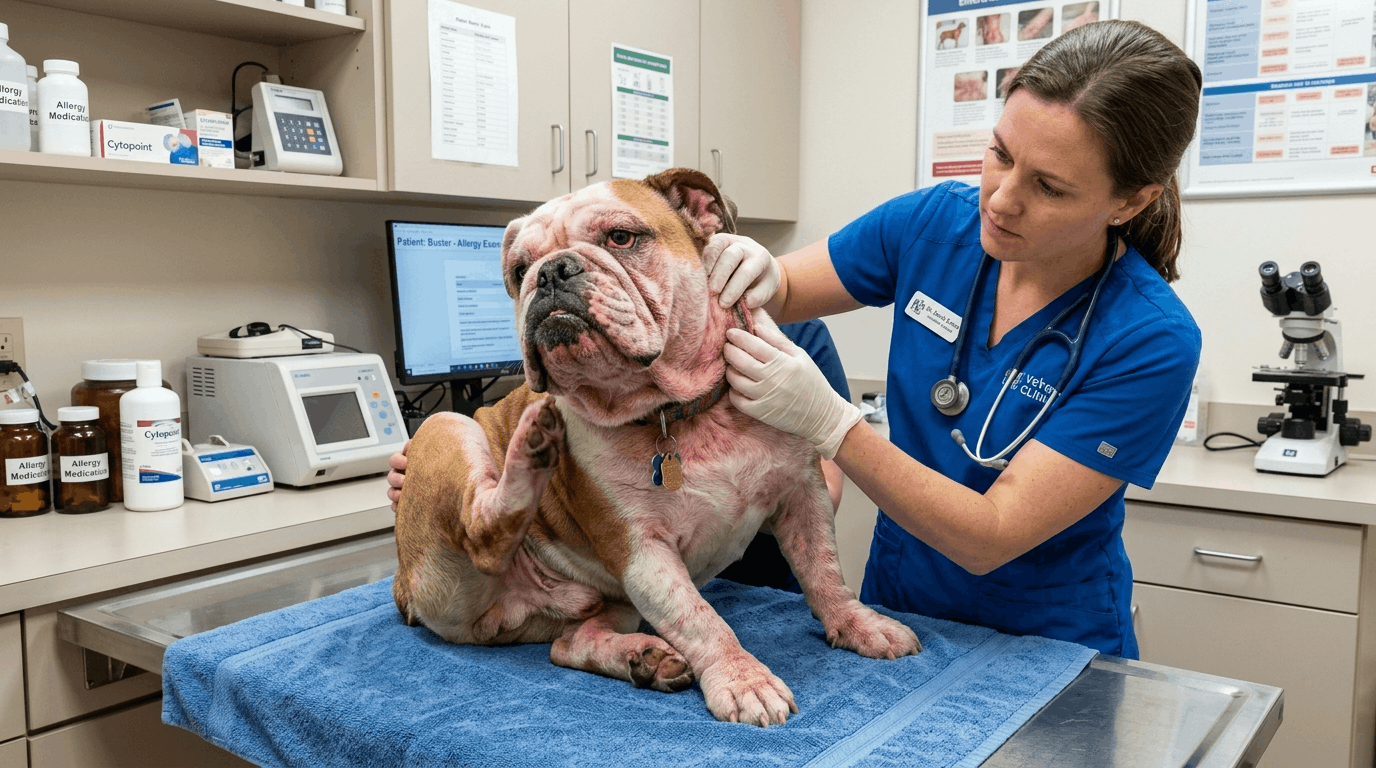
Bulldog allergy symptoms usually affect the skin first. Persistent itching remains one of the most common warning signs. Dogs may scratch constantly, rub against furniture, or bite their paws repeatedly.
Redness around the face, belly, paws, and ears also appears frequently.
Additionally, bulldogs with allergies often develop recurring ear infections. Owners may notice head shaking, foul smells, discharge, or sensitivity around the ears.
Skin infections sometimes follow excessive scratching.
Hot spots, scabs, hair loss, and thickened skin may develop when irritation continues untreated. Bulldogs may also lick their paws excessively until the fur turns reddish-brown from saliva staining.
Some bulldogs experience digestive symptoms too.
Vomiting, loose stool, gas, bloating, or frequent stomach upset can indicate food allergies or sensitivities.
Behavior changes matter as well.
Dogs suffering from discomfort may become restless, irritable, tired, or unusually clingy.
Environmental Allergies in Bulldogs
Environmental allergies affect many bulldogs year-round.
Common triggers include pollen, grass, mold spores, dust mites, smoke, cleaning chemicals, and household fragrances. Bulldogs often inhale or absorb these allergens through their skin.
Bulldog allergy symptoms caused by environmental triggers usually include itching, inflamed paws, watery eyes, and chronic ear problems.
Some dogs worsen after outdoor walks, especially during high pollen seasons. Others react more indoors because of dust and cleaning products.
Environmental allergies often become seasonal initially.
However, repeated exposure may eventually cause year-round irritation.
Regular cleaning can help reduce allergens significantly. Vacuuming carpets, washing bedding frequently, and using air purifiers often improve symptoms over time.
Food Allergies and Ingredient Sensitivities
Food allergies develop differently from environmental allergies.
Instead of seasonal flare-ups, symptoms usually remain consistent throughout the year. Bulldogs commonly react to proteins like chicken, beef, dairy, or wheat.
Bulldog allergy symptoms linked to food often include itchy skin, digestive upset, chronic ear infections, and excessive licking.
Some bulldogs also experience poor coat quality or recurring skin infections due to hidden food sensitivities.
Owners should avoid changing foods constantly without guidance.
Instead, veterinarians often recommend elimination diets to identify problem ingredients safely. During elimination trials, dogs eat limited ingredients for several weeks before foods are slowly reintroduced.
Patience matters greatly during this process.
Skin Fold Irritation and Secondary Infections
Bulldog wrinkles require careful attention.
Moisture trapped inside facial folds creates the perfect environment for bacteria and yeast growth. Allergies often worsen these conditions by increasing inflammation and itching.
Bulldog allergy symptoms frequently become more severe around the face and neck folds.
Owners may notice redness, strong odor, discharge, or raw irritated skin within wrinkles. Dogs sometimes paw at their faces constantly because of discomfort.
Daily cleaning helps prevent complications.
Soft wipes or vet-approved cleansing solutions usually work best. Additionally, keeping folds dry after cleaning reduces moisture buildup.
Ignoring wrinkle irritation may eventually lead to painful infections that require medical treatment.
How Ear Infections Relate to Allergies
Recurring ear infections often signal hidden allergies.
Bulldogs with chronic itching commonly develop inflamed ear canals due to allergic reactions. Warm moist ears allow bacteria and yeast to multiply rapidly.
Bulldog allergy symptoms involving the ears may include:
- Head shaking
- Scratching around the ears
- Bad odor
- Redness
- Dark discharge
- Pain during touch
Many owners treat ear infections repeatedly without addressing the underlying allergy problem.
However, long-term relief usually requires allergy management alongside ear treatment.
Routine ear cleaning helps reduce flare-ups significantly.
The Role of Diet in Bulldog Skin Health
Nutrition strongly affects allergy management.
Low-quality diets often contain fillers, artificial additives, and ingredients that increase inflammation. Bulldogs usually benefit from simple high-quality foods with balanced nutrients.
Bulldog allergy symptoms may improve when owners switch to limited-ingredient or sensitive-skin formulas.
Omega-3 fatty acids often help reduce inflammation naturally. Additionally, proper hydration supports healthier skin function.
Healthy diets strengthen the skin barrier gradually.
Owners should also monitor treats carefully because hidden allergens frequently appear in snacks and flavored products.
Small dietary improvements sometimes create major changes in skin comfort.
Safe Grooming Practices for Allergic Bulldogs
Overbathing may worsen skin irritation.
Many owners bathe bulldogs too frequently when trying to reduce itching. Unfortunately, harsh shampoos often strip natural oils and increase dryness.
Bulldog allergy symptoms usually respond better to gentle skin-supportive grooming routines.
Hypoallergenic shampoos designed for sensitive skin help reduce irritation without damaging the skin barrier. Additionally, fragrance-free products generally work best.
Regular brushing also supports healthier skin.
Brushing removes allergens, loose fur, and debris while improving circulation. However, owners should avoid aggressive brushing that irritates already inflamed skin.
Consistency matters more than excessive grooming.
How Stress Can Worsen Allergy Symptoms
Stress affects physical health more than many owners realize.
Anxious bulldogs sometimes scratch and lick themselves excessively even when allergies remain mild. Additionally, stress hormones may increase inflammation throughout the body.
Bulldog allergy symptoms often worsen during stressful situations like moving, travel, loud environments, or routine disruptions.
Creating a calm predictable environment helps support healing. Daily exercise, mental stimulation, and consistent routines often improve emotional balance significantly.
Calm dogs frequently recover faster from allergy flare-ups too.
Medical Treatments That May Help
Some bulldogs require veterinary treatment for severe allergies.
Antihistamines sometimes reduce mild itching, although results vary between dogs. Veterinarians may also recommend medicated shampoos, prescription diets, topical creams, or allergy injections.
Bulldog allergy symptoms caused by severe inflammation occasionally require stronger medications temporarily.
However, long-term management usually combines multiple approaches instead of relying on one solution alone.
Veterinary guidance remains extremely important.
Owners should avoid giving human medications without professional approval because some products may harm dogs.
Natural Ways to Support Allergy Relief
Natural support methods may improve comfort alongside veterinary care.
Frequent washing of bedding helps remove allergens from sleeping areas. Additionally, wiping paws after walks reduces pollen exposure indoors.
Bulldog allergy symptoms sometimes improve with humidifiers during dry weather.
Healthy supplements may also support skin health. Fish oil, probiotics, and veterinarian-approved skin supplements often help reduce inflammation gradually.
Natural methods work best when combined with consistent routines and proper medical guidance.
When to See a Veterinarian Immediately
Some symptoms require urgent attention.
Bulldogs struggling to breathe, developing severe swelling, or experiencing sudden widespread rashes need immediate veterinary care. Additionally, untreated skin infections may become painful quickly.
Bulldog allergy symptoms should never be ignored when they interfere with eating, sleeping, or normal behavior.
Persistent scratching, bleeding skin, chronic infections, or severe digestive upset also deserve professional evaluation.
Early treatment often prevents long-term complications.
Building a Long-Term Allergy Management Routine
Managing allergies requires patience and consistency.
Owners should track flare-ups carefully to identify possible triggers. Recording foods, environmental changes, weather patterns, and grooming products may reveal important patterns over time.
Bulldog allergy symptoms often improve gradually rather than instantly.
Small daily habits create the biggest long-term results. Regular cleaning, quality nutrition, routine vet care, and stress reduction all contribute to healthier skin and improved comfort.
No single solution works for every bulldog.
However, structured care routines usually help owners manage allergies more confidently and effectively.
Bulldogs are lovable companions, but their sensitive skin and immune systems make allergies extremely common. Fortunately, most bulldog allergy symptoms can be managed successfully with early recognition, consistent care, and proper veterinary guidance. Owners who understand the warning signs often prevent more serious infections and discomfort later. Simple routines like regular wrinkle cleaning, healthy nutrition, environmental control, and stress management create noticeable improvements over time. Additionally, patient observation helps identify triggers that may otherwise go unnoticed. Although allergies can feel overwhelming initially, bulldogs often live happier and more comfortable lives when owners stay proactive and organized. The key is consistency, realistic expectations, and a willingness to adjust routines when necessary. With the right approach, even severe allergy symptoms can become far more manageable while supporting better long-term health for your bulldog.
FAQ
1. What are the first warning signs of allergies in bulldogs?
Early signs often include itching, paw licking, red skin, ear irritation, and frequent scratching.
2. Can bulldogs develop food allergies later in life?
Yes, bulldogs may develop food sensitivities or allergies even after eating the same food for years.
3. How often should bulldog wrinkles be cleaned?
Most bulldogs benefit from wrinkle cleaning several times weekly, although some require daily care.
4. Are seasonal allergies common in bulldogs?
Yes, many bulldogs react to pollen, grass, mold, and other seasonal environmental allergens.
5. What helps reduce skin irritation naturally in bulldogs?
Consistent grooming, quality nutrition, clean bedding, omega-3 supplements, and stress reduction may help improve skin comfort.