
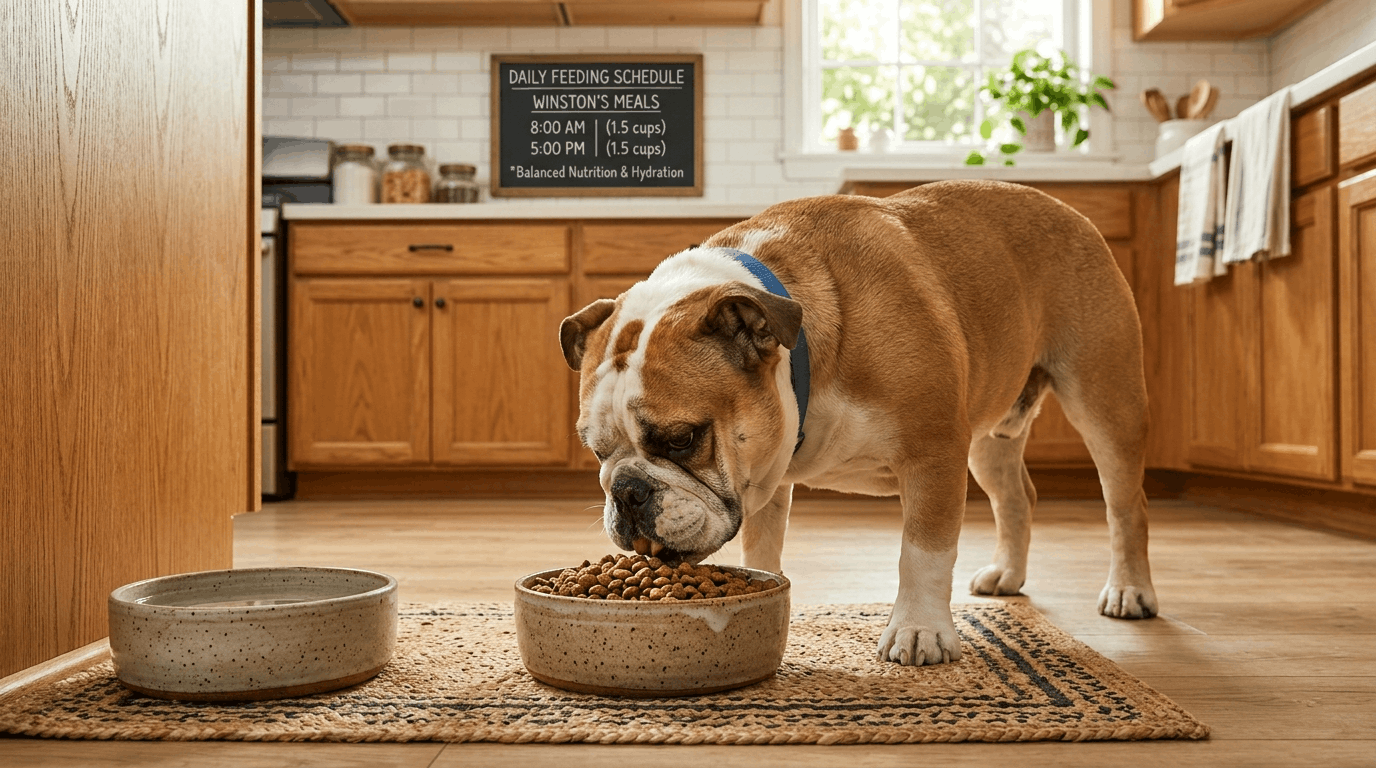
Creating the right bulldog daily diet can make a major difference in your dog’s health, behavior, energy, and overall quality of life. Bulldogs are lovable, loyal, and calm companions, but they also face unique health challenges that require careful nutritional support. Because of their stocky build, sensitive digestion, skin issues, and tendency toward weight gain, bulldogs need balanced meals that provide consistent nutrition without excess calories.
Many owners accidentally overfeed bulldogs because the breed often appears hungry. However, overeating quickly leads to obesity, joint strain, breathing difficulty, and lower energy levels. Additionally, poor-quality ingredients may trigger allergies, digestive discomfort, skin irritation, and chronic inflammation.
A healthy feeding routine does not need to feel complicated. In fact, the best bulldog daily diet usually focuses on simple principles like portion control, quality protein, healthy fats, digestible carbohydrates, hydration, and feeding consistency. When owners build realistic routines, bulldogs often maintain healthier weight levels and stronger overall health.
Nutrition also affects mood, coat condition, mobility, and immune function. Therefore, daily food choices matter more than many people realize. Bulldogs thrive when owners focus on balanced long-term habits instead of trendy feeding fads or excessive treats.
Understanding what your bulldog truly needs helps create a healthier and happier life for years to come.
Why Bulldogs Need Specialized Nutrition
Bulldogs have unique physical characteristics that influence their dietary needs.
Their compact muscular bodies place pressure on joints and breathing systems. Additionally, many bulldogs experience skin sensitivities, food allergies, digestive issues, and low exercise tolerance. Poor nutrition can worsen these problems quickly.
A proper bulldog daily diet supports healthy body weight while reducing unnecessary inflammation. Additionally, balanced nutrition helps improve digestion, energy levels, and coat quality naturally.
Because bulldogs often gain weight easily, owners must pay close attention to calorie intake and portion sizes. Even small amounts of excess weight can increase breathing difficulty and strain joints significantly.
Specialized nutrition does not always require expensive food. However, ingredient quality and feeding balance remain extremely important.
Protein Should Be the Foundation
High-quality protein plays a major role in bulldog health.
Protein supports muscle maintenance, immune function, tissue repair, and healthy energy levels. Additionally, bulldogs benefit from digestible animal proteins that provide essential amino acids.
Chicken, turkey, beef, lamb, salmon, and duck often work well when dogs tolerate them properly. However, some bulldogs develop sensitivities to common proteins like chicken or beef over time.
Owners should monitor skin condition, digestion, and stool quality carefully after introducing new foods.
A healthy bulldog daily diet usually includes moderate to high-quality protein without excessive fillers or by-products.
Protein also helps bulldogs maintain lean muscle while controlling body fat more effectively.
Healthy Fats Support Skin and Coat Health
Bulldogs frequently struggle with dry skin and irritation.
Healthy fats support skin moisture, coat softness, brain function, and joint comfort. Omega-3 fatty acids particularly help reduce inflammation naturally.
Fish oil, salmon oil, flaxseed, and quality animal fats often improve skin condition over time. Additionally, healthy fats support stable energy levels throughout the day.
However, moderation remains important because bulldogs gain weight easily.
A balanced bulldog daily diet includes enough healthy fat to support skin and joint health without adding excessive calories.
Owners should avoid low-quality fats or heavily processed oils whenever possible.
Digestible Carbohydrates Matter
Carbohydrates provide energy and digestive support when chosen carefully.
Brown rice, sweet potatoes, oats, pumpkin, peas, and quinoa often digest well for many bulldogs. Additionally, fiber-rich carbohydrates help support healthy bowel movements and digestive consistency.
Highly processed fillers sometimes trigger gas, bloating, or digestive discomfort in sensitive bulldogs.
A balanced bulldog daily diet includes moderate digestible carbohydrates that support steady energy without unnecessary fillers.
Owners should pay attention to how their bulldog reacts after meals. Digestive comfort often reveals whether ingredients work well individually.
Portion Control Prevents Obesity
Weight management is one of the most important aspects of bulldog health.
Bulldogs naturally have slower metabolisms and lower activity levels compared to highly athletic breeds. Additionally, they often enjoy eating enthusiastically, which increases overeating risk.
Owners should measure food portions carefully instead of free-feeding throughout the day.
A healthy bulldog daily diet supports stable body condition without excessive fat accumulation. Ideally, owners should feel the dog’s ribs gently without seeing prominent bones.
Maintaining healthy weight reduces stress on joints, breathing systems, and the heart significantly.
Consistent Feeding Schedules Help Digestion
Routine supports digestive stability.
Most adult bulldogs do well with two balanced meals daily. Puppies may require smaller meals more frequently during growth stages.
Additionally, consistent feeding times help regulate digestion and reduce stomach upset.
A stable bulldog daily diet creates predictable digestive patterns that improve comfort and reduce stress naturally.
Late-night overfeeding should generally be avoided because it may worsen digestive discomfort or nighttime restlessness.
Hydration Supports Overall Health
Water intake often gets overlooked.
Bulldogs need constant access to fresh clean water throughout the day. Proper hydration supports digestion, circulation, temperature regulation, and joint health.
Additionally, some bulldogs drink less than necessary, especially during cooler weather.
Owners can encourage hydration by adding moisture-rich foods or incorporating wet food occasionally if appropriate.
A healthy bulldog daily diet always includes proper hydration support alongside balanced meals.
Avoid Excessive Treats
Treats easily sabotage healthy nutrition goals.
Many owners unknowingly feed large numbers of calorie-dense treats throughout the day. Even small extras add up quickly in bulldogs because of their lower calorie needs.
Additionally, unhealthy treats often contain artificial additives, sugars, fillers, or poor-quality ingredients.
A balanced bulldog daily diet leaves room for treats in moderation while maintaining calorie control.
Simple healthy rewards like small meat pieces, carrots, or blueberries may work well for many bulldogs.
Food Allergies Are Common in Bulldogs
Many bulldogs experience food sensitivities.
Symptoms often include itching, ear infections, redness, paw licking, gas, or digestive upset. Additionally, certain proteins or grains may trigger inflammation in sensitive dogs.
Owners should work carefully when changing foods.
Elimination diets sometimes help identify problem ingredients effectively under veterinary guidance.
A carefully managed bulldog daily diet may reduce skin irritation and digestive discomfort significantly over time.
Joint Support Is Important
Bulldogs often develop joint stress because of their heavy compact bodies.
Proper nutrition supports joint mobility and muscle stability naturally. Additionally, maintaining healthy weight reduces unnecessary pressure on hips, knees, and elbows.
Glucosamine, chondroitin, omega-3 fats, and collagen sometimes help support long-term joint comfort.
A balanced bulldog daily diet protects mobility while supporting active movement and healthier aging.
Whole Foods Can Improve Nutrition
Fresh whole foods may provide additional benefits when used safely.
Lean meats, pumpkin, blueberries, green beans, spinach, carrots, and eggs often support balanced nutrition naturally. However, owners should introduce foods gradually and avoid toxic ingredients completely.
Foods like onions, grapes, chocolate, garlic, and xylitol remain dangerous for dogs.
A healthy bulldog daily diet may include safe whole-food additions alongside balanced commercial food when properly managed.
Choose Quality Ingredients Over Marketing
Expensive branding does not always mean better nutrition.
Owners should read ingredient lists carefully instead of focusing only on advertising claims. Real protein sources, digestible carbohydrates, and limited fillers often matter more than trendy packaging.
Additionally, foods with excessive artificial colors, preservatives, or vague ingredient descriptions should generally be avoided.
A reliable bulldog daily diet focuses on nutritional quality rather than marketing trends.
Senior Bulldogs Need Nutritional Adjustments
Older bulldogs often become less active.
As metabolism slows, calorie needs usually decrease. However, protein quality remains important for preserving muscle mass and supporting mobility.
Additionally, senior bulldogs may benefit from joint-support ingredients and easier-to-digest meals.
A properly adjusted bulldog daily diet helps aging dogs maintain comfort, mobility, and healthy weight more effectively.
Puppies Require Balanced Growth Nutrition
Bulldog puppies grow quickly during early development.
Balanced nutrition supports bone growth, muscle development, brain function, and immune health. However, overfeeding may contribute to unhealthy weight gain even during puppyhood.
Additionally, puppies need controlled calcium and phosphorus levels to support proper skeletal growth.
A carefully planned bulldog daily diet during puppy stages lays the foundation for healthier adulthood.
Monitor Stool Quality Regularly
Digestive health reveals important nutritional information.
Healthy stools usually appear firm, consistent, and easy to pass. Loose stools, excessive gas, constipation, or chronic digestive discomfort often signal dietary problems.
Additionally, sudden changes may indicate ingredient intolerance or feeding imbalance.
Owners should observe digestive patterns consistently while adjusting food gradually when necessary.
A stable bulldog daily diet supports regular healthy digestion naturally.
Exercise and Nutrition Work Together
Food alone cannot maintain bulldog health fully.
Regular walks, light play, and controlled exercise help support muscle tone, healthy weight, and emotional balance. Additionally, physical activity improves digestion and energy regulation naturally.
Bulldogs should avoid overheating during exercise because of their breathing structure.
A balanced bulldog daily diet works best alongside realistic daily movement and proper rest.
Slow Feeding May Improve Digestion
Some bulldogs eat extremely quickly.
Fast eating often increases gas, bloating, regurgitation, and digestive discomfort. Additionally, rapid eating may lead to overeating before fullness registers properly.
Slow feeder bowls, puzzle feeders, or portion spacing sometimes help significantly.
A calmer bulldog daily diet routine supports better digestion and healthier eating habits naturally.
Consistency Matters More Than Perfection
Many owners feel overwhelmed trying to feed perfectly.
However, consistency matters far more than chasing complicated feeding trends. Bulldogs benefit most from balanced long-term habits that owners can maintain realistically.
Simple routines often outperform constantly changing diets.
A healthy bulldog daily diet focuses on moderation, ingredient quality, hydration, weight control, and digestive stability over time.
Feeding bulldogs properly does not require perfection or extreme dietary trends. Instead, the healthiest routines usually stay balanced, consistent, and realistic for long-term success. A well-managed bulldog daily diet supports muscle strength, healthy skin, digestion, mobility, energy levels, and emotional well-being. Because bulldogs face unique challenges involving weight gain, skin sensitivity, breathing strain, and joint stress, proper nutrition becomes especially important throughout every stage of life. Additionally, simple habits like portion control, hydration, quality ingredients, and consistent feeding schedules often create major improvements naturally. Owners who focus on sustainable routines instead of marketing trends usually see the best long-term results. Bulldogs thrive when nutrition supports their specific physical needs while maintaining healthy body condition and digestive comfort. In the end, daily food choices play one of the biggest roles in helping bulldogs live stronger, healthier, and more comfortable lives.
FAQ
1. How often should bulldogs eat each day?
Most adult bulldogs do well with two balanced meals daily to support digestion and energy stability.
2. What foods commonly trigger bulldog allergies?
Chicken, beef, dairy, wheat, and certain fillers sometimes trigger skin or digestive sensitivities in bulldogs.
3. Why do bulldogs gain weight so easily?
Bulldogs usually have slower metabolisms and lower activity levels, which makes portion control extremely important.
4. Can whole foods improve bulldog nutrition?
Yes. Safe whole foods like pumpkin, carrots, eggs, and lean meats may support balanced nutrition naturally.
5. What is the biggest nutrition mistake bulldog owners make?
Overfeeding and giving excessive treats often contribute to obesity, joint strain, and reduced overall health.