Bulldogs are famous for their calm demeanor and their love of a long nap. Beneath that relaxed exterior, though, is an intelligent, playful dog who still needs something to do with their brain. Providing adequate bulldog mental enrichment is one of the most practical things you can do for a breed that cannot safely burn energy on long runs. It helps prevent boredom, reduces the chewing, barking and digging that boredom produces, and gives you a calmer, more responsive companion. This guide covers why enrichment matters so much for a flat-faced breed, a menu of low-impact activities that actually work, how to adapt them to your dog’s age and health, and a simple daily routine you can start this week.
This article is general information from Bulldog Experts, not veterinary advice. Bulldogs are a brachycephalic breed with specific breathing and heat-tolerance limits, so check any new activity with your veterinarian, especially if your dog has a diagnosed airway, joint or weight condition.
Why Bulldog Mental Enrichment Matters More Than Mileage
Dogs need activities that challenge their brains, not just their legs. Enrichment, as described by organizations such as the ASPCA, means giving a dog outlets for natural behaviors like sniffing, foraging, chewing and problem-solving. For most breeds, a long hike covers a lot of that ground. Bulldogs are different.
Because of their brachycephalic (flat-faced) anatomy, bulldogs are prone to breathing difficulty and overheating during strenuous exercise. The American Veterinary Medical Association’s guidance on brachycephalic dogs recommends keeping exercise moderate and avoiding heat. That leaves a gap: a dog with a working brain and a body that cannot work hard. Mental enrichment fills that gap safely.
When the gap is not filled, the signs are predictable. A bored bulldog chews table legs, barks at nothing, digs up the garden bed, or simply becomes lethargic and withdrawn. These are not signs of a bad dog. They are signs of a dog with nothing to do.
Low-Impact Enrichment Activities That Work for Bulldogs
Every activity below can be done indoors, at a walking pace or slower, and in short sessions. Start easy, watch your dog’s breathing, and build difficulty only once they are succeeding comfortably.
Puzzle Toys and Treat Dispensers
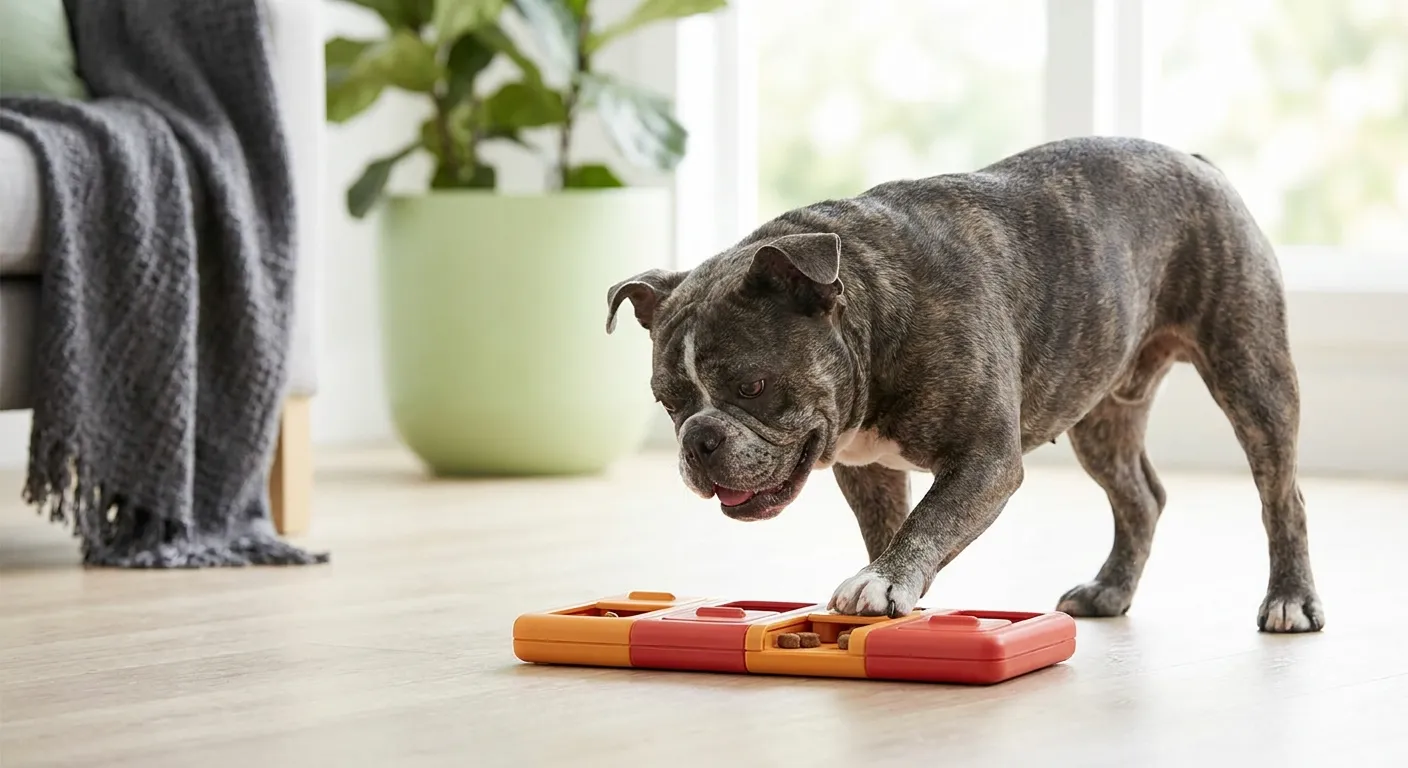
Puzzle feeders make your bulldog work out how to release food. Start with a simple treat ball or a rubber toy stuffed with a little of their regular kibble, then move to sliding-panel or flip-lid puzzles once they understand the game. A useful side benefit: serving a meal through a slow feeder or puzzle slows down fast eaters, which many bulldog owners struggle with. Supervise new toys the first few times so your dog does not become frustrated or start chewing the toy itself apart.
Scent Work and Nose Games
Scent work is the single best enrichment category for a bulldog because it is intensely engaging and almost zero impact. Begin with “find it”: show your dog a treat, place it in plain view a few feet away, and release them to get it. Over a week or two, progress to hiding treats behind furniture legs, under a cup, or in a different room. A snuffle mat (fabric strips woven through a rubber sink mat) turns a single meal into ten minutes of focused foraging.
Short Training Sessions and New Tricks
Basic cues like sit, stay, down and come are mental exercise in their own right. Once those are solid, add a new trick every couple of weeks: paw, touch (nose to hand), spin, or “go to mat”. Keep sessions to five minutes, end on a success, and use small, soft treats so you are not loading up a breed that gains weight easily. New owners will find our essential first steps for training a bulldog puppy a useful foundation.
Controlled Interactive Play
Gentle tug and short-distance fetch provide a physical outlet without over-exertion. Keep tug sessions brief, let your dog win sometimes, and stop immediately if you hear heavy, noisy breathing. Indoor fetch down a hallway, rolling the toy rather than throwing it, is often a better fit than a park session in warm weather.
Toy Rotation
Leaving every toy out all the time is a common mistake; dogs habituate quickly and stop caring. Keep three or four toys out, store the rest, and swap the set every few days. Each “new” toy regains its novelty and your dog gets a fresh problem to solve without you buying anything.
Structured Activities for Deeper Cognitive Stimulation
New Routes, New Environments
A short walk on an unfamiliar street gives your bulldog a flood of new smells and sounds. Vary your route rather than extending it. A quiet visit to a pet-friendly hardware store or a shaded park bench also counts. This exposure supports confidence and adaptability, which we cover in our bulldog puppy socialization tips.
DIY Enrichment Games
You do not need to buy expensive gear. Try these household-item games:
- Muffin tin game: drop a treat into a few cups of a muffin tin, cover every cup with a tennis ball, and let your dog nose the balls off.
- Box shred: hide a few treats in crumpled paper inside a cardboard box; supervise so no cardboard is swallowed.
- Towel roll: sprinkle kibble along a towel, roll it up loosely, and let your dog unroll it.
- Cup shuffle: place a treat under one of three cups, slide them around, and let your dog pick.
Canine Good Citizen and Therapy Work
For bulldogs who enjoy training, the American Kennel Club‘s Canine Good Citizen program is a structured goal: a series of calm, controlled behaviors around people and other dogs. The temperament many bulldogs already have suits this kind of work, and therapy-dog visits can follow for the right dog. None of it requires athleticism, only focus and patience.
Adapting Enrichment to Your Bulldog’s Health and Age
Watch for Overheating and Breathing Strain
Stop any activity at the first sign of noisy or labored breathing, excessive panting, heavy drooling, bluish gums, or an unsteady gait. Offer water and move to a cool room. Enrichment sessions should be short and frequent rather than long and intense, and on warm days should be indoors only. If your bulldog is carrying extra weight, which makes breathing harder, see our guide to senior bulldog weight management.
Match the Activity to Life Stage
Puppies learn fast but tire fast; two or three two-minute games beat one long one. Adult bulldogs can handle more complex puzzles and longer scent trails. Seniors and dogs with hip, elbow or spinal issues do best with floor-level scent games and gentle training that does not involve jumping or tight turns. Our article on supporting bulldog joint health covers what to avoid. When in doubt, ask your veterinarian which movements are off-limits for your particular dog.
What Consistent Mental Engagement Does for Your Bulldog
Owners who build enrichment into the daily routine usually notice the same changes:
- Fewer destructive behaviors. A dog that has spent ten minutes dismantling a puzzle has far less interest in dismantling your sofa.
- Better focus in training. Dogs who regularly solve problems become quicker to offer behaviors and to engage with you.
- A calmer household. Mental work is tiring in a way that does not stress a bulldog’s airway, so you get a contentedly sleepy dog rather than an over-heated one.
- A stronger bond. Nearly every activity on this list involves you, and that shared time is the point.
A Simple Daily Bulldog Mental Enrichment Routine
You do not need to overhaul your schedule. A realistic day looks like this:
- Morning: breakfast served in a puzzle feeder or snuffle mat instead of a bowl.
- Midday: a five-minute “find it” game or a short walk on a new route, weather permitting.
- Evening: a five-minute training session on one cue or trick, followed by a brief, gentle tug game.
- Every few days: rotate the toy set.
Every bulldog is an individual. Watch which games your dog returns to, drop the ones that frustrate them, and keep the sessions short enough that they always end wanting more.
Common Enrichment Mistakes Bulldog Owners Make
- Treating enrichment as a substitute for a vet check when a dog’s behavior changes suddenly.
- Overfeeding through treats; use part of the daily kibble ration for games instead.
- Running scent games or play in warm weather or direct sun.
- Making puzzles too hard too soon, which teaches the dog to give up.
- Leaving a dog unsupervised with cardboard, fabric or toys they can shred and swallow.
FAQ
What are some easy ways to mentally stimulate a bulldog?
Feed meals through a puzzle feeder or snuffle mat, play “find it” with hidden treats, run five-minute training sessions, and rotate toys every few days. All of these are low-impact and work indoors.
How much mental exercise does a bulldog need each day?
There is no fixed number. Most bulldogs do well with several short sessions spread through the day rather than one long block, adjusted to the individual dog’s age, weight and breathing. If your dog is restless or destructive, add a session; if they are panting or disengaged, shorten it.
Can a lack of mental engagement cause behavior problems in bulldogs?
Yes. Boredom commonly shows up as destructive chewing, excessive barking, digging, or restlessness. If the behavior appears suddenly or alongside other changes, rule out a medical cause with your veterinarian first.
Which toys are best for a bulldog’s brain?
Treat-dispensing balls, sliding or flip-lid puzzle feeders, snuffle mats, and durable rubber toys that can be stuffed with food. Choose sturdy toys sized for a strong jaw, and supervise anything soft or shreddable.
How can I make walks more engaging without making them longer?
Change the route, allow plenty of sniffing time, and pause for a quick sit or touch cue at a few points along the way. For a bulldog, a slow, sniff-heavy twenty minutes is far more enriching than a brisk forty.
Enrichment is not an optional extra for a bulldog; it is how this breed gets the stimulation that other dogs get from running. Build a few of these games into your routine, keep them cool and short, and you will have a happier, calmer flat-faced friend.