
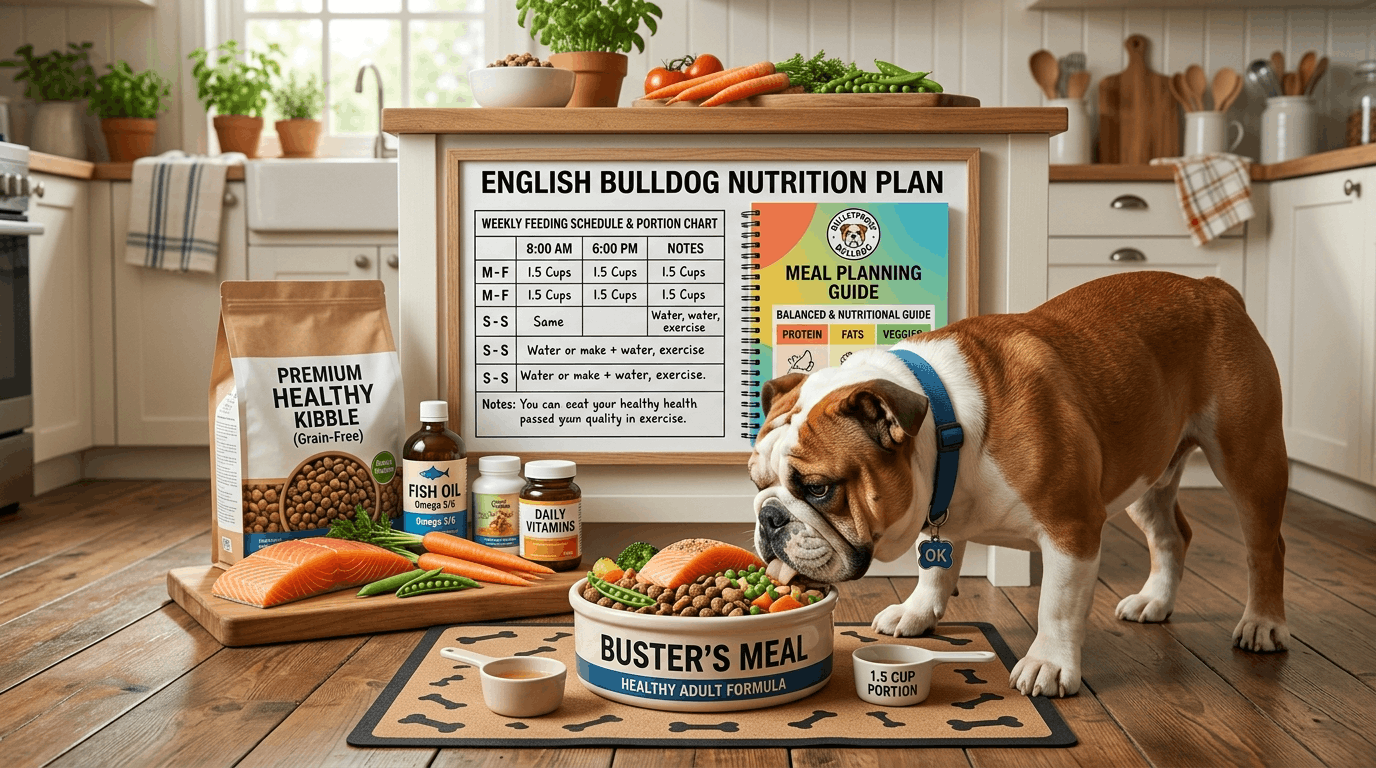
A balanced bulldog nutrition plan plays a major role in your dog’s long-term health, energy, and overall quality of life. Bulldogs may look tough on the outside, but they often have sensitive digestion, allergy issues, weight challenges, and skin problems that require careful nutritional support. Without the right feeding routine, many bulldogs struggle with low energy, obesity, inflammation, and recurring health concerns.
Good nutrition affects nearly every part of a bulldog’s body.
Healthy food supports stronger joints, cleaner skin folds, improved breathing, better digestion, and more stable energy throughout the day. Additionally, the right diet can reduce unnecessary stress on the body while helping bulldogs maintain a healthier weight.
Many owners unintentionally overfeed bulldogs because the breed naturally loves food.
Unfortunately, excess weight places extra pressure on joints, breathing, and heart health. A structured bulldog nutrition plan helps owners avoid these problems while creating healthier daily habits.
Feeding should not feel confusing or overwhelming. Instead, simple consistency and balanced nutrition usually produce the best long-term results.
Why Bulldogs Need Specialized Nutrition
Bulldogs have unique physical needs compared to many breeds.
Their stocky build places added pressure on joints and mobility. Additionally, bulldogs commonly experience allergies, digestive sensitivity, skin irritation, and overheating issues that proper nutrition may help improve.
Many bulldogs also gain weight very easily.
Even small amounts of extra body fat can affect breathing, movement, and overall comfort significantly. Because bulldogs are not extremely active dogs, calorie balance becomes especially important.
A thoughtful bulldog nutrition plan focuses on nutrient quality rather than simply feeding larger portions.
High-quality protein, balanced fats, proper hydration, and controlled calorie intake help bulldogs stay healthier over time.
Nutrition also influences emotional behavior.
Dogs with stable digestion and balanced energy often appear calmer, happier, and more comfortable throughout the day.
Choosing the Right Protein Sources
Protein forms the foundation of healthy bulldog nutrition.
Strong muscles, healthy skin, and proper immune function all depend on adequate protein intake. Additionally, protein helps bulldogs maintain healthy body composition as they age.
High-quality animal proteins usually work best.
Chicken, turkey, beef, salmon, lamb, and duck are common choices in many healthy diets. However, some bulldogs develop sensitivities to certain proteins over time.
A balanced bulldog nutrition plan may require experimenting carefully to identify ingredients that work best for your individual dog.
Signs of protein sensitivity sometimes include:
- Chronic itching
- Ear infections
- Digestive upset
- Paw licking
- Red skin
- Excessive gas
Owners should introduce dietary changes gradually rather than switching foods suddenly.
The Importance of Healthy Fats
Healthy fats support bulldog skin and coat health significantly.
Omega-3 and omega-6 fatty acids help reduce inflammation while supporting brain function, joint comfort, and skin hydration. Additionally, healthy fats may improve coat softness and reduce dryness.
Fish oil often provides excellent support.
Many bulldogs benefit from salmon oil or omega supplements as part of a complete bulldog nutrition plan. However, portion control still matters because fats contain concentrated calories.
Balanced fat intake supports energy without encouraging unhealthy weight gain.
Owners should avoid low-quality foods containing excessive fillers and unhealthy fat sources that increase inflammation.
Managing Bulldog Weight Properly
Weight control remains one of the most important parts of bulldog health care.
Extra body weight increases strain on joints, hips, knees, and breathing function. Additionally, overweight bulldogs often experience lower energy and increased heat sensitivity.
A proper bulldog nutrition plan helps maintain healthy body condition instead of simply focusing on large meals.
Many owners accidentally overfeed because bulldogs appear constantly hungry. However, bulldogs are naturally food-motivated dogs and often continue eating beyond healthy limits.
Portion consistency matters greatly.
Healthy treats, controlled meal sizes, and regular exercise all help support better long-term weight management.
Owners should monitor body condition regularly instead of relying only on the scale.
Understanding Food Allergies in Bulldogs
Food allergies are common in this breed.
Some bulldogs react poorly to specific proteins, grains, preservatives, or artificial ingredients. Additionally, allergies often affect skin, digestion, and ear health simultaneously.
Recurring symptoms may signal dietary sensitivities.
A healthy bulldog nutrition plan should minimize inflammatory ingredients whenever possible. Many owners notice major improvements after switching to simpler ingredient lists with fewer artificial additives.
Common allergy symptoms include:
- Chronic scratching
- Red skin
- Ear infections
- Digestive upset
- Loose stool
- Paw chewing
- Watery eyes
Veterinarians may recommend elimination diets to identify trigger ingredients more accurately.
How Fiber Supports Digestive Health
Digestive balance matters greatly for bulldogs.
This breed commonly experiences gas, bloating, loose stool, and digestive sensitivity. Proper fiber intake helps regulate digestion while supporting healthier bowel movements.
Moderate fiber works best for most bulldogs.
Pumpkin, sweet potatoes, brown rice, oats, and vegetables may support digestion gently when included appropriately. Additionally, healthy fiber supports gut bacteria balance.
A balanced bulldog nutrition plan avoids excessive fillers while still providing digestive support through natural ingredients.
Owners should monitor stool quality because digestive health often reflects nutritional balance directly.
Hydration Is More Important Than Many Owners Realize
Hydration affects bulldog health daily.
Water supports digestion, joint lubrication, circulation, skin health, and temperature regulation. Additionally, proper hydration helps bulldogs recover better after exercise or hot weather exposure.
Some bulldogs drink less water than they should.
Owners can encourage hydration by providing clean fresh water consistently and incorporating moisture-rich foods when appropriate.
A complete bulldog nutrition plan should always include hydration awareness alongside food quality.
During hot weather, hydration becomes even more important because bulldogs struggle with overheating more easily than many breeds.
Meal Timing and Feeding Routines
Consistent feeding schedules help bulldogs maintain better digestive balance.
Irregular meal timing sometimes contributes to digestive upset, overeating, and energy fluctuations. Additionally, structured routines help owners manage portions more accurately.
Most adult bulldogs do well with two measured meals daily.
Puppies may require more frequent feeding schedules while growing. However, free feeding often increases obesity risk in adult bulldogs.
A strong bulldog nutrition plan focuses on consistency rather than unpredictable feeding habits.
Owners should also avoid intense exercise immediately after meals because bulldogs can experience digestive discomfort more easily.
Foods Bulldogs Should Avoid
Certain foods may create serious health risks.
Highly processed snacks, fatty table scraps, sugary treats, and excessive sodium often contribute to obesity and inflammation. Additionally, some foods become toxic to dogs entirely.
Owners should avoid feeding:
- Chocolate
- Grapes
- Raisins
- Onions
- Garlic
- Xylitol
- Alcohol
- Excessive dairy
- Fried foods
Even small unhealthy habits can slowly damage long-term health.
A healthy bulldog nutrition plan focuses on consistent quality rather than frequent indulgence.
Supporting Joint Health Through Nutrition
Bulldogs commonly experience joint stress because of their body structure.
Proper nutrition helps support mobility and reduce unnecessary strain on hips, knees, and elbows. Additionally, maintaining healthy weight remains one of the best ways to protect joints long term.
Some foods contain ingredients that support joint function naturally.
Glucosamine, chondroitin, omega fatty acids, and collagen may help support mobility in certain dogs. However, nutritional support works best when combined with healthy weight management.
A carefully structured bulldog nutrition plan often improves movement comfort significantly over time.
The Role of Skin Health and Nutrition
Bulldogs frequently struggle with skin irritation.
Wrinkle infections, itching, redness, and dry skin often worsen when diets contain inflammatory ingredients or nutritional imbalances. Additionally, poor nutrition weakens the skin barrier over time.
Healthy skin starts internally.
A balanced bulldog nutrition plan supports stronger skin through healthy fats, quality protein, hydration, and anti-inflammatory ingredients.
Owners often notice improved coat shine, reduced itching, and healthier wrinkles after dietary improvements.
Should Bulldogs Eat Grain-Free Diets?
Grain-free diets remain controversial.
Some bulldogs benefit from grain-free foods when allergies exist. However, many dogs tolerate healthy grains perfectly well. Additionally, grain-free does not automatically mean healthier.
Whole grains sometimes support digestion and energy balance effectively.
Brown rice, oats, and barley may provide useful nutrients in moderation. The most important factor involves ingredient quality rather than marketing labels.
A personalized bulldog nutrition plan should match the individual dog’s needs instead of blindly following trends.
Veterinary guidance helps owners make safer decisions when dietary concerns arise.
Healthy Treats That Support Better Nutrition
Treats should complement healthy feeding habits rather than replace them.
Many commercial treats contain excessive calories, fillers, and artificial ingredients. Additionally, frequent over-treating contributes heavily to bulldog obesity.
Healthier treat options may include:
- Small carrot pieces
- Blueberries
- Apple slices
- Freeze-dried meat treats
- Plain pumpkin
- Cucumber slices
Moderation still matters.
Even healthy treats should remain a small portion of total daily calorie intake within a balanced bulldog nutrition plan.
How Age Changes Nutritional Needs
Bulldog nutrition changes over time.
Puppies require higher calorie intake and growth support, while senior bulldogs often need joint support and controlled calories. Additionally, aging dogs may develop slower metabolism and lower activity levels.
Senior bulldogs benefit from easily digestible nutrition with strong protein support and moderate calorie control.
A flexible bulldog nutrition plan adapts as health needs change throughout different life stages.
Regular veterinary checkups help owners adjust nutrition appropriately over time.
Building a Sustainable Feeding Routine
The best nutrition plan remains realistic and consistent.
Complicated feeding systems often fail because they become difficult to maintain long term. Additionally, bulldogs respond best to stable routines that owners can follow daily.
Healthy feeding habits include:
- Measured portions
- Consistent meal timing
- Fresh water access
- Limited unhealthy treats
- Quality ingredients
- Weight monitoring
- Regular exercise
- Veterinary guidance
A balanced bulldog nutrition plan should support long-term health rather than temporary trends or extreme diets.
Bulldogs thrive when owners focus on sustainable care instead of perfection.
A proper bulldog nutrition plan supports far more than simple hunger management. Balanced nutrition influences skin health, digestion, energy, mobility, breathing, emotional balance, and long-term quality of life. Because bulldogs often face weight challenges, allergies, digestive sensitivity, and joint strain, thoughtful feeding routines become especially important throughout every life stage. Fortunately, healthy nutrition does not require complicated systems or extreme diets. Most bulldogs thrive with consistent meal schedules, quality ingredients, balanced portions, proper hydration, and healthy weight management. Additionally, early attention to nutrition often helps prevent larger health issues later in life. Owners who stay proactive about food quality, portion control, and allergy awareness usually see improvements in comfort, energy, and overall wellness. In the end, a balanced approach to nutrition helps bulldogs stay healthier, happier, and more comfortable for many years.
FAQ
1. How many times should a bulldog eat each day?
Most adult bulldogs do well with two balanced meals daily to support digestion and healthy weight control.
2. What foods commonly trigger bulldog allergies?
Chicken, dairy, wheat, soy, and artificial additives sometimes trigger skin or digestive sensitivities in certain bulldogs.
3. Can nutrition improve bulldog skin problems?
Yes. Balanced diets with quality protein and healthy fats often support healthier skin and coat condition.
4. Are bulldogs prone to obesity?
Yes. Bulldogs gain weight easily, especially when portions become too large or exercise stays limited.
5. Should bulldogs take nutritional supplements?
Some bulldogs benefit from supplements like omega fatty acids or joint support products, although veterinary advice is recommended first.