Your vet is one of the most important relationships in your bulldog’s life. Bulldogs have a distinctive build, with a short muzzle, deep skin folds and a stocky frame, so it helps to find a practice that’s comfortable caring for the breed and that you feel comfortable talking to. Choosing a vet for your bulldog doesn’t have to be stressful. With a short list of questions and a quick visit or two, you can find a clinic that suits both of you. This guide walks you through what to look for, what to ask and how to make the first appointment go smoothly.
Disclaimer: This content is for informational purposes only and is not a substitute for professional veterinary advice. Every practice is different, so use these questions as a starting point for your own conversations.
Start before you need one
The best time to choose a vet is before anything goes wrong. If you’re bringing home a new puppy, moving house or simply unsure about your current clinic, give yourself a few weeks to look around. Searching in a hurry, when your dog is unwell, rarely leads to the best fit.
Begin with a shortlist of two or three practices within a reasonable drive. Ask other bulldog owners in your area for recommendations, read recent reviews with a critical eye, and check each clinic’s website for its services, opening hours and emergency arrangements.
Look for signs of good standards
In the United States and Canada, some practices choose to be accredited by the American Animal Hospital Association (AAHA). PetMD explains that AAHA accreditation is a voluntary process that reflects a hospital’s commitment to standards beyond basic legal requirements, and that accredited practices are re-evaluated to keep their status. The AAHA itself describes accredited hospitals as voluntarily meeting its standards for veterinary care.
Accreditation isn’t the only sign of a good practice, and plenty of excellent clinics aren’t accredited. Still, it’s a useful question to ask, along with how the clinic keeps its team’s training up to date.
Questions to ask about bulldogs specifically
A quick phone call or a short visit is the easiest way to get a feel for a practice. These questions help you find out how comfortable the team is with the breed.
Experience with the breed
- Do you see many bulldogs or other short-nosed breeds?
- Is there a vet on the team with a particular interest in brachycephalic dogs?
- How do you approach breathing assessments at routine check-ups?
Anaesthesia and procedures
At some point your bulldog may need sedation or anaesthesia, whether for dental care, a procedure or an investigation. It’s reasonable to ask how the clinic plans for short-nosed breeds. The AAHA lists anaesthesia among the areas its standards cover, so an accredited practice should be happy to talk about it. Useful questions include:
- How do you prepare a bulldog for anaesthesia?
- Who monitors my dog during and after a procedure?
- How and when will you update me?
- What does recovery look like, and when can my dog come home?
You don’t need to understand the clinical details. What you’re looking for is a team that welcomes the question and explains its approach clearly.
Skin, eyes and everyday care
Many bulldog owners spend time on wrinkles, eyes and ears. Ask how the clinic likes to handle skin-fold checks and whether a nurse can show you how to clean folds and ears at home. Our guides to bulldog skin fold care and bulldog ear cleaning are a good primer to bring along.
Practical questions that matter day to day
The best vet in the world won’t suit you if you can never get an appointment. Ask about the practical side too:
- What are your opening hours, and how far ahead do appointments book up?
- What happens out of hours? Do you provide emergency cover, or refer to a nearby emergency clinic?
- Can I see the same vet each time if I’d like to?
- Do you offer phone or video advice for minor questions?
- How do you handle insurance claims and paperwork?
- Can you give me an estimate before non-urgent treatment?
If you’re thinking about pet insurance, our pet insurance checklist for bulldogs covers what to ask insurers, and your vet’s answer on claims paperwork is part of that picture.
Visit before you commit
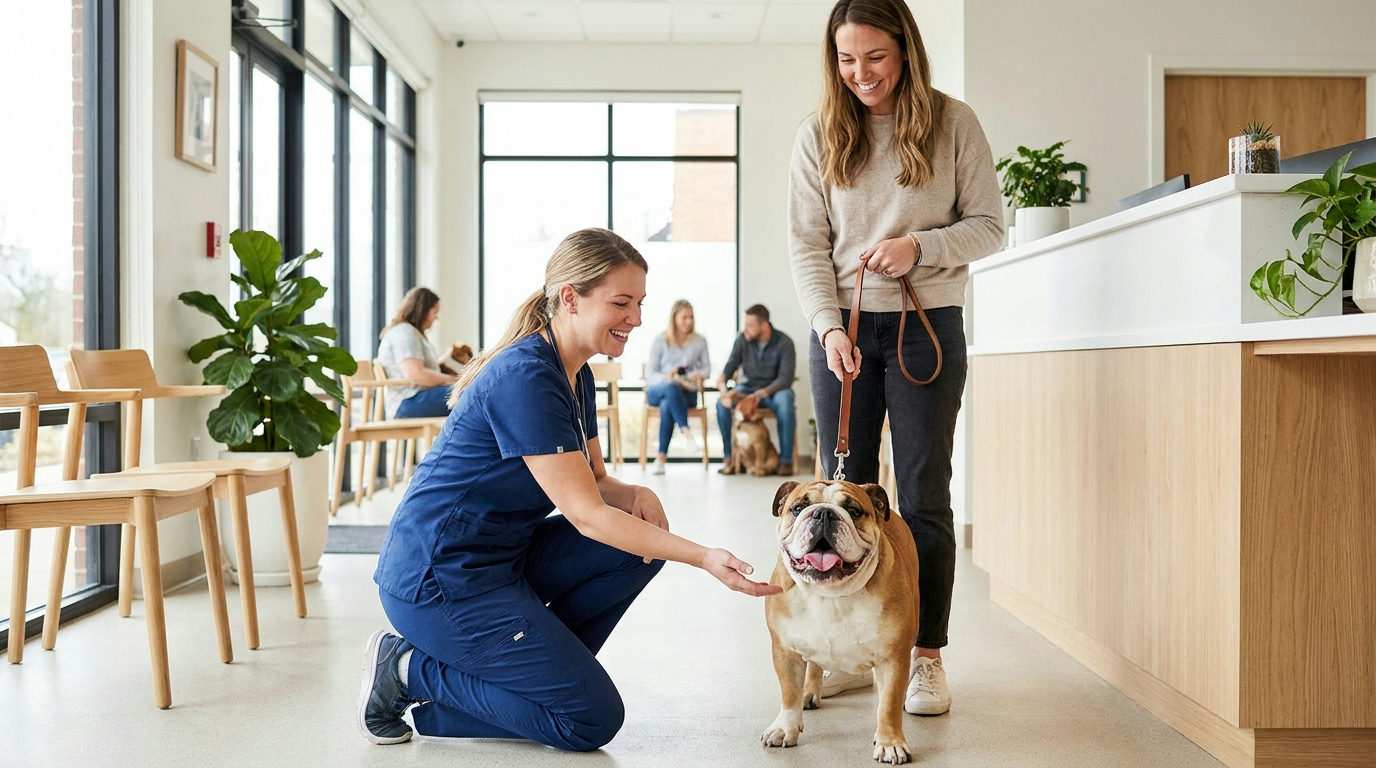
Many clinics are happy for you to pop in, say hello and look around reception. Bring your bulldog for a quick weigh-in or a “happy visit” with a treat if the clinic allows it. Notice:
- Is reception calm and clean, with space for a nervous dog to wait?
- Are staff friendly with animals and with you?
- Does the clinic feel cool and well ventilated? That matters for a bulldog on a warm day.
- Do they explain things without rushing you?
The AAHA describes its approach as including teams skilled in reading pet body language and minimising stress. Whether or not a clinic is accredited, a team that notices your dog’s comfort is a good sign.
Making the first appointment count
Once you’ve chosen, book a routine check-up rather than waiting for a problem. It gives your vet a baseline for your dog and gives your dog a positive first experience.
What to bring
- Previous vet records, vaccination history and any test results.
- A list of current food, treats, supplements and medications.
- Notes on anything you’ve noticed: snoring, skin changes, eye discharge, appetite or energy shifts.
- Your questions, written down.
- High-value treats to keep the visit positive.
Questions for the first visit
- What should I keep an eye on as my bulldog grows older?
- How often would you like to see us for check-ups?
- Is there anything about my dog’s weight, breathing or skin you’d like me to work on?
- What signs should prompt me to call you straight away?
Our guide to early bulldog health screenings has more ideas for building a long-term care plan with your vet.
Helping your bulldog enjoy vet visits
A relaxed dog is easier to examine, and a relaxed owner asks better questions. A few habits help:
- Practise handling at home. Gently touch paws, ears, mouth and folds, then reward. It makes exams feel familiar.
- Get used to the carrier or car. Short, fun trips make the journey less of a signal that something unpleasant is coming.
- Choose quieter times. Ask the clinic when reception is usually calmest.
- Keep cool. On warm days, travel in a cool car and wait inside rather than on a hot pavement.
Our article on bulldog body language can help you spot early signs of stress and respond before it builds.
When it’s time to change vets
Sometimes a practice simply isn’t the right fit. If you consistently feel rushed, unheard or unable to get clear explanations, it’s fine to look elsewhere. Ask for your dog’s full records to be transferred, and give the new clinic time to review them before your first visit. A good working relationship is worth the effort.
The bottom line on choosing a vet for your bulldog
Choosing a vet for your bulldog is about fit as much as facilities. Look for a team that’s comfortable with short-nosed breeds, explains its approach to anaesthesia clearly, has practical arrangements that work for your life, and treats your dog with patience. Start early, ask your questions, visit before you commit, and make that first check-up a positive one. It’s the start of a partnership that will look after your bulldog for years.
Sources are linked throughout. Always discuss your dog’s individual needs with your own veterinarian.