The holiday season is when many families pack the car and visit relatives, and it’s natural to want your bulldog along. With some planning, traveling with a bulldog can go smoothly. The key is to plan around your dog’s short nose and sensitivity to heat and stress, rather than treating them like any other passenger. This guide covers how to decide whether your dog should come, how to prepare for a road trip, what to know before considering air travel, and what to pack.
Disclaimer: This content is for informational purposes only and is not a substitute for professional veterinary advice. Speak to your veterinarian before any trip, and check current rules with your airline, accommodation and destination.
Start with one question: should your bulldog come?
It’s worth asking honestly whether the trip suits your dog. The American Veterinary Medical Association (AVMA) travel guide notes that some pets may be uncomfortable with travel, and that brachycephalic (short-nosed) pets are more at risk than others of overheating or breathing problems during travel, especially air travel. It suggests a reliable pet sitter or boarding as alternatives when travel isn’t a good fit.
A short car journey to a quiet house may suit your bulldog well. A long day of driving followed by a busy, noisy household may not. Think about your own dog’s age, health, temperament and how they’ve coped with past outings. Then book a check-up and talk it through with your vet.
Book a pre-trip vet visit
A visit a few weeks before you leave lets you ask the right questions while there’s still time to act on the answers. Bring a list:
- Is my dog fit for this journey and this length of trip?
- Are vaccinations and parasite prevention up to date for where we’re going?
- Will I need a health certificate or other paperwork?
- What should I do if my dog gets travel sick or stressed?
- Can you recommend a vet near our destination?
The AVMA advises talking to your vet if you’re considering medication for travel. Its FAQ on short-nosed dogs and air travel specifically recommends avoiding tranquilizing pets for air travel. Never give your dog any medication for a trip without your vet’s direct advice.
Road trips: setting up the car
For most bulldog families, driving is the more practical option. A little preparation makes a big difference.
Restraint and space
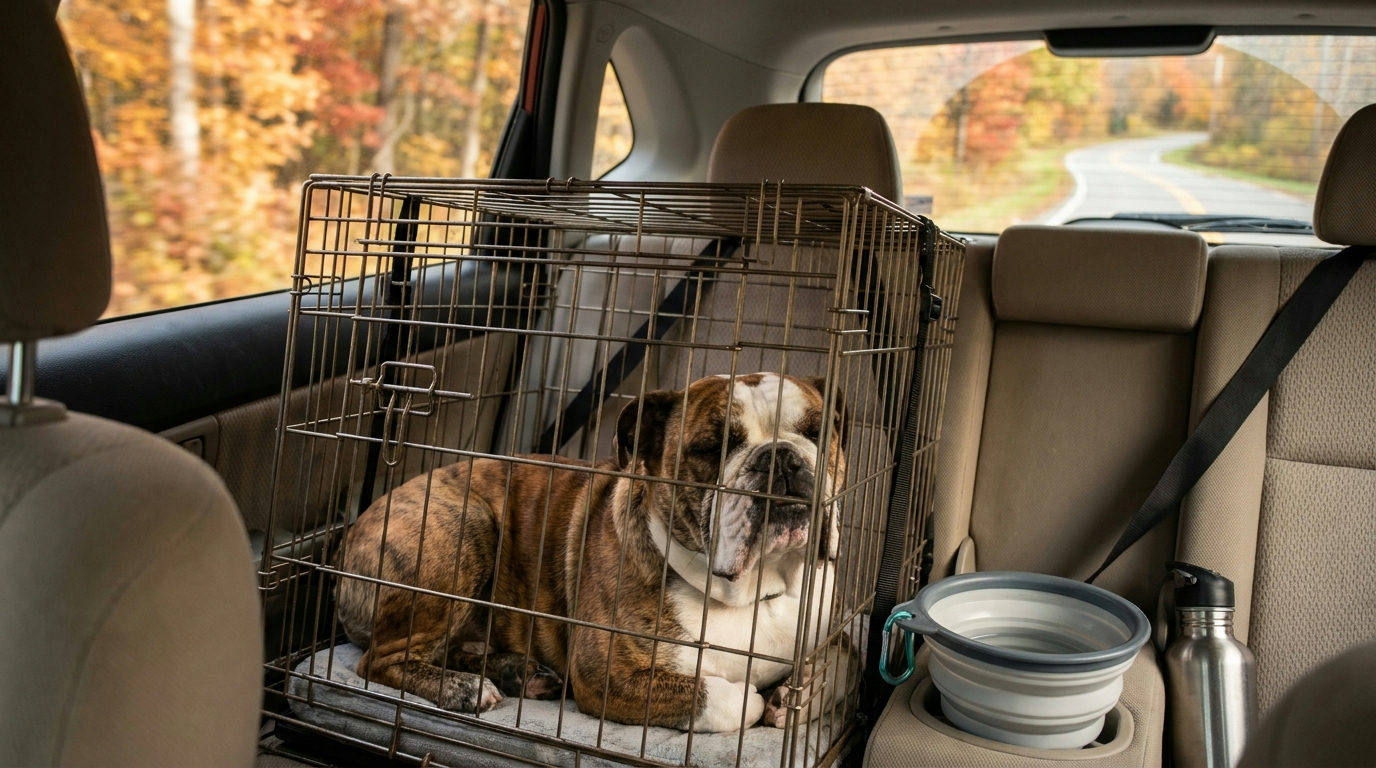
The AVMA recommends safely restraining dogs in the car, using a crate or a restraint designed for pets. For a bulldog, choose a well-ventilated crate with room to stand, turn and lie down, or a crash-tested harness that clips into a seat belt. Never let your dog ride with their head out of the window or loose in the front seat.
Temperature and airflow
Keep the car comfortably cool, with steady airflow reaching your dog. Avoid placing the crate in direct sun. If you’re traveling in warmer areas, plan your driving for the cooler parts of the day. Keep an eye on your bulldog’s breathing in the mirror. Our guide to bulldog breathing problems explains what noisy or laboured breathing can look like.
Practice runs
The AVMA suggests getting your pet used to car travel before any long trip. Start with short drives to fun places, like a favourite park, and build up gradually. Reward calm behaviour in the crate or harness at home before you even start the engine.
On the road: breaks, food and water
Plan regular stops so your bulldog can stretch, sniff, drink and relieve themselves. Choose shaded spots where possible and keep your dog on a lead at rest areas, since busy car parks are no place for a loose dog.
Offer water at every stop rather than leaving a full bowl in a moving car. Many owners give a lighter meal before travel to reduce the chance of travel sickness. Ask your vet what timing suits your dog.
Above all, never leave your bulldog alone in a parked car. The AVMA travel guide is clear on not leaving pets unattended in vehicles. Plan stops where someone can stay with the dog, or where dogs are welcome inside.
What to know before considering air travel
Air travel deserves extra caution for bulldogs. The AVMA’s short-nosed dog FAQ explains that brachycephalic breeds are more prone to respiratory problems, and that stress and overheating can make breathing harder. The AVMA travel guide also advises checking your airline’s current pet travel policies, because airlines update them from time to time and some restrict short-nosed breeds.
If you’re considering a flight, speak to your vet first and contact the airline directly. Ask exactly what their current policy is for bulldogs, whether your dog could travel in the cabin, and what crate requirements apply. The AVMA FAQ also suggests getting your pet used to the travel crate in advance and avoiding thick blankets or fluffy items that a short-nosed dog could bury their nose in. For many bulldog families, driving or leaving the dog with a trusted sitter turns out to be the better option.
Staying with family or in a rental
Arriving somewhere new can be exciting and overwhelming for a dog. Check in advance that your bulldog is welcome, and ask about other pets, young children and any house rules.
When you arrive, set up a quiet base for your dog with their own bed, bowls and a familiar blanket. Keep to your usual feeding and walking times as closely as you can. Do a quick walk-through for hazards like open stairs, unfenced gardens, accessible bins or holiday food left on low tables. If your bulldog finds new places stressful, our guide to bulldog separation anxiety has tips for helping them settle.
If your bulldog stays home
Deciding not to bring your dog is a perfectly good outcome. If you choose a pet sitter or boarding, as the AVMA travel guide suggests as alternatives, set your bulldog up for success. Arrange a short trial visit or overnight stay before the holidays so your dog meets the carer in a calm setting. Write a one-page care sheet covering feeding amounts and times, walk routines, wrinkle cleaning, any medications, and signs that should prompt a call to the vet. Leave your vet’s details and an emergency contact, and let your clinic know who will be caring for your dog while you’re away.
Settling back in after the trip
Travel can leave a dog tired or a little unsettled. Once you’re home, give your bulldog a quiet day or two to recover, with short walks, plenty of rest and their normal meals. Check their skin folds, paws and ears after the journey, and keep an eye on appetite and energy. If anything seems off for more than a day, call your vet. Then jot down what worked and what didn’t, so traveling with a bulldog is even easier next time.
Your bulldog travel packing list
The AVMA travel guide recommends packing for your pet’s needs just as you would for your own, including identification such as a travel tag and a recent photo. A practical list for a bulldog:
- Collar or harness with an up-to-date ID tag, and current microchip details.
- A recent photo of your dog on your phone.
- Vaccination records and any required health paperwork.
- Enough of your dog’s usual food for the whole trip, plus a little extra.
- Water and a travel bowl.
- Any medications, with instructions.
- Bed or blanket, plus a favourite toy or chew.
- Waste bags, wipes and a towel.
- Wrinkle-cleaning supplies.
- Your vet’s contact details and a vet near your destination.
The bottom line on traveling with a bulldog
Traveling with a bulldog works best when the plan starts with your dog’s comfort. Talk to your vet, keep the car cool and well ventilated, take regular breaks, and never leave your dog alone in a vehicle. Treat air travel with real caution and check current airline rules directly. And if the trip isn’t right for your bulldog this time, a trusted sitter can be the kindest choice of all.
Sources are linked throughout. Always confirm current travel requirements with your veterinarian, airline and destination.