Rainy days, chilly evenings and quiet afternoons all call for something to do indoors. Bulldog enrichment is simply the habit of giving your dog interesting, low-effort things to sniff, solve and chew, so that a day at home doesn’t feel like a day of waiting. This guide gives you a handful of gentle indoor games, a simple weekly plan and a few safety habits, written for everyday owners. It doesn’t set exercise limits for your dog, because your own vet is the right person to do that.
Disclaimer: This content is for informational purposes only and is not a substitute for professional veterinary advice. Ask your veterinarian how much and what kind of activity suits your individual dog.
Start with your vet’s guidance on activity
Every bulldog is different in age, build and energy. Before you add new games, ask your vet how much activity suits your dog, whether any games should be avoided and how to count treats within daily food. Keep their answers handy and let them shape everything below.
For general ideas, the American Kennel Club publishes guides to indoor games to play with your dog and indoor scent games. They’re good further reading, and your vet can help you choose what fits your bulldog. For background on safe, gentle activity, see our guide to bulldog exercise routines.
What bulldog enrichment can look like
Enrichment doesn’t need to be complicated or expensive. Most ideas fall into a few simple groups:
- Sniffing games: hunting for treats or a favourite toy.
- Food puzzles: getting part of a meal out of a puzzle toy or a homemade set-up.
- Mini training sessions: a few cues practised for a minute or two.
- Chewing and licking: supervised time with a suitable chew or lick mat.
- Calm company: relaxed time together, such as gentle brushing or a cuddle on the sofa.
Short sessions tend to work best. A few minutes of focused play followed by a rest keeps things easy and fun.
Sniffing games for the living room
Many dogs enjoy using their noses, and scent games can be played in small indoor spaces. Start simple and let your dog succeed.
Treat under the cup
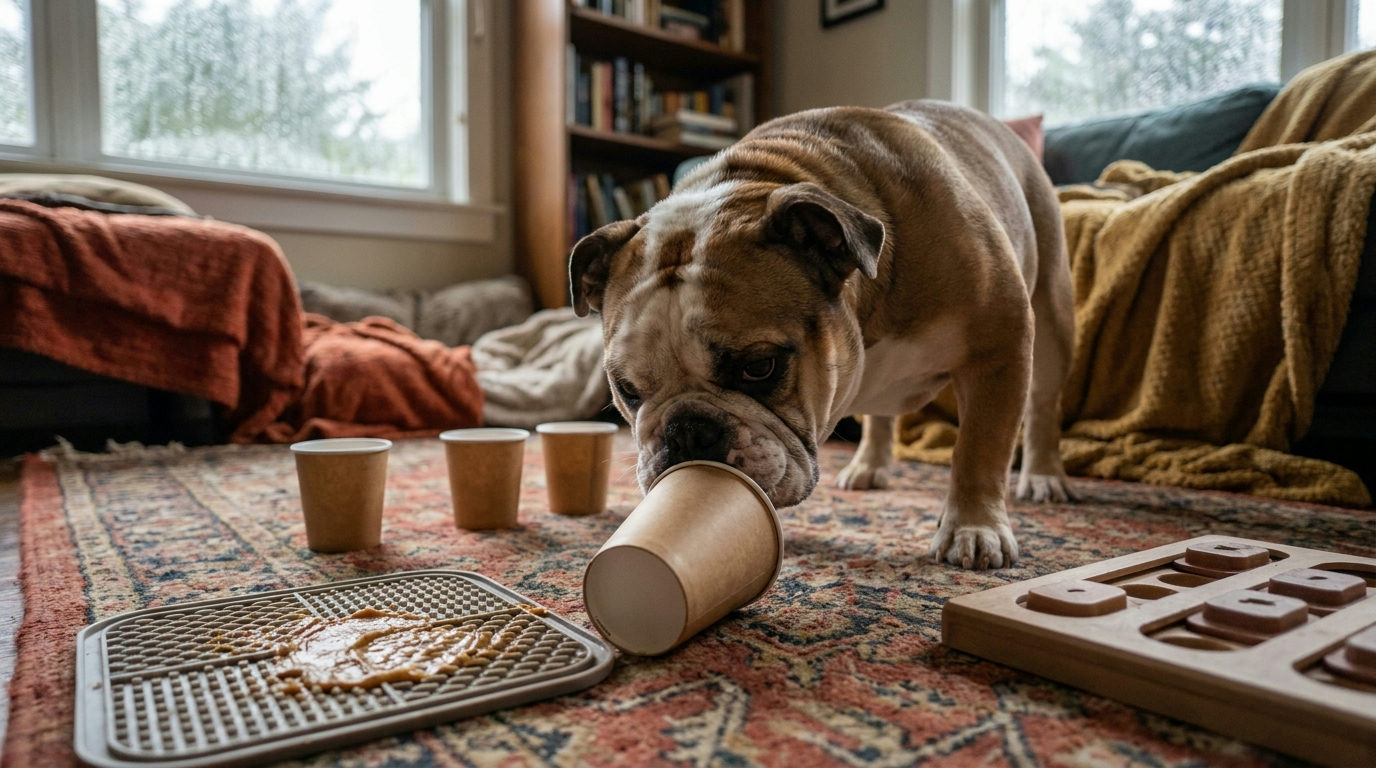
Place a few small cups upside down in a row and hide a treat under one while your dog watches. Say a cue such as “find it” and let them nose the cup over. Start with one cup and add more over several sessions.
Muffin tin puzzle
Put small treats in some of the holes of a muffin tin and cover them with safe, dog-sized objects such as tennis balls too large to swallow. Your dog moves the covers to find the treats. The AKC’s DIY toy guide has similar ideas, and as with any puzzle, stay with your dog while they play.
Scent trail
Drag a smelly treat across the floor in a short line and place it at the end, then let your dog follow the trail. Lengthen the trail a little each time.
Hide and seek with a toy
Ask your dog to wait, hide a favourite toy in an easy spot and say your search cue. Celebrate when they find it, and make the hiding places gradually more challenging.
Food puzzles and slow feeding
Some owners use part of a meal in a puzzle toy or a lick mat so mealtime takes a little longer and gives their dog something to think about. If you try this, a few habits keep it simple:
- Ask your vet whether using part of your dog’s meal is a good idea, and how to adjust amounts.
- Start with the easiest settings, so your dog feels successful.
- Stay nearby while your dog eats from a puzzle.
- Wash toys and mats regularly, following the label.
- Check toys for wear and replace them if they are damaged.
Mini training sessions
Short training sessions can double as enrichment. Pick one or two easy cues your dog already knows, such as sit, touch or settle on a mat. Practise for a minute or two with treats and praise, then finish while your dog is still keen. Our guide to positive bulldog training explains how to time rewards and keep sessions upbeat.
Chewing, licking and quiet time
Chewing and licking are calming activities for many dogs. A lick mat spread with a small amount of your dog’s usual food or a suitable chew can give them something to settle with. Choose items that suit your dog’s size and chewing style, supervise every session and put chews away when they’re finished. If you’re unsure which chews are suitable, ask your vet.
A simple weekly enrichment plan
You don’t need a new activity every day. Rotating a few favourites keeps things fresh. Here’s one example week:
- Monday: treat-under-the-cup game.
- Tuesday: a short training session and a lick mat.
- Wednesday: scent trail across the living room.
- Thursday: muffin tin puzzle with part of a meal, if your vet agrees.
- Friday: hide and seek with a favourite toy.
- Saturday: a gentle sniff-and-stroll outdoors, depending on the weather and your vet’s advice.
- Sunday: a quiet day with brushing and cuddles.
Swap days around to suit your household, and skip any game your dog doesn’t enjoy.
Setting up a cosy enrichment corner
A dedicated spot makes it easier to start and finish games. Choose a quiet corner with a non-slip rug or mat, keep a small tub of supplies nearby, such as cups, a muffin tin, a lick mat, a few treats and a towel, and put everything back when you’re done. Many owners find that a predictable spot helps their dog understand that it’s game time. Keep the area free of cords, small objects and anything your dog could chew by accident, and keep it out of direct sun and away from heaters so it stays comfortable.
Rotating games so they stay fresh
Dogs can lose interest when the same game appears every day, so a simple rotation helps. Keep a few favourites in one tub and others in a second, and swap them every week or so. Notice which games make your dog’s tail wag and which get a shrug, and lean towards the favourites. A quick note on your phone after each session, covering the game, how long it lasted and how your dog seemed, builds a clear picture over a couple of weeks. Bring that list to your next vet visit if you’d like help adjusting the plan.
Involving the whole household
If children or other family members join in, show them the rules first: play gently, never take a puzzle or chew away roughly, and stop when your dog walks away. An adult should supervise every session. Agreeing on the same cue words means everyone gets the same friendly response from your dog.
Keeping things safe
- Supervise. Stay with your dog during puzzles, chews and games.
- Choose sensible sizes. Avoid objects small enough to swallow.
- Keep sessions short. Stop while your dog is still interested.
- Mind the temperature. Keep play in a comfortable room, and see our cold weather bulldog care guide for cooler-season routines.
- Watch your dog’s body language. Our guide to bulldog body language helps you tell when it’s time to stop.
- Tidy up. Put puzzles, mats and chews away when you’re done.
If your bulldog isn’t interested
Some dogs take time to warm up to new games. Try a higher-value treat, an easier version of the game or a different time of day. If your dog seems uninterested in everything, or something about their energy or behaviour seems different from usual, mention it to your vet.
Questions to ask your vet
- How much activity suits my dog right now?
- Are there any games or toys I should avoid?
- How should I count treats and puzzle meals in my dog’s daily food?
- Which chews and lick-mat fillings would you recommend?
- Is there anything about my dog’s age or health that should change the plan?
Quick bulldog enrichment checklist
- Ask your vet about activity and treats first.
- Pick one or two simple games for the week.
- Keep sessions short and stay close.
- Choose safe sizes and check toys for wear.
- Finish while your dog is still interested.
- Rotate favourites to keep things fresh.
The bottom line on bulldog enrichment
Bulldog enrichment can be as simple as a treat under a cup and a few minutes of sniffing. Start small, stay close, keep sessions short and let your dog show you what they enjoy. Check in with your vet about activity and food, rotate a few favourites through the week and you’ll have a flexible, low-effort routine for any indoor day.
Sources are linked where used. Always ask your veterinarian about your individual dog.